Green roof systems may seem like a modern idea, but living roofs have existed for thousands of years. They were in great demand in the wealthier suburbs of ancient Rome and Persia, where the well-heeled used green roofs to relax and enjoy long summer evenings. The Vikings’ needs were more basic. Their simple sod roofs insulated homes from freezing outdoor temperatures.
It wasn’t until the early twentieth century that the Germans pioneered flat green roofs in their cities and towns. The Germans went on in the 1960s to develop the extensive green roof technology used today. These modern roofs benefited from better waterproof membranes and lighter drainage systems.
Growing interest in environmental sustainability saw the spread of green roof systems from Germany into the rest of Europe and beyond. Today, they appear on homes and commercial buildings across the world.
Types of Green Roof
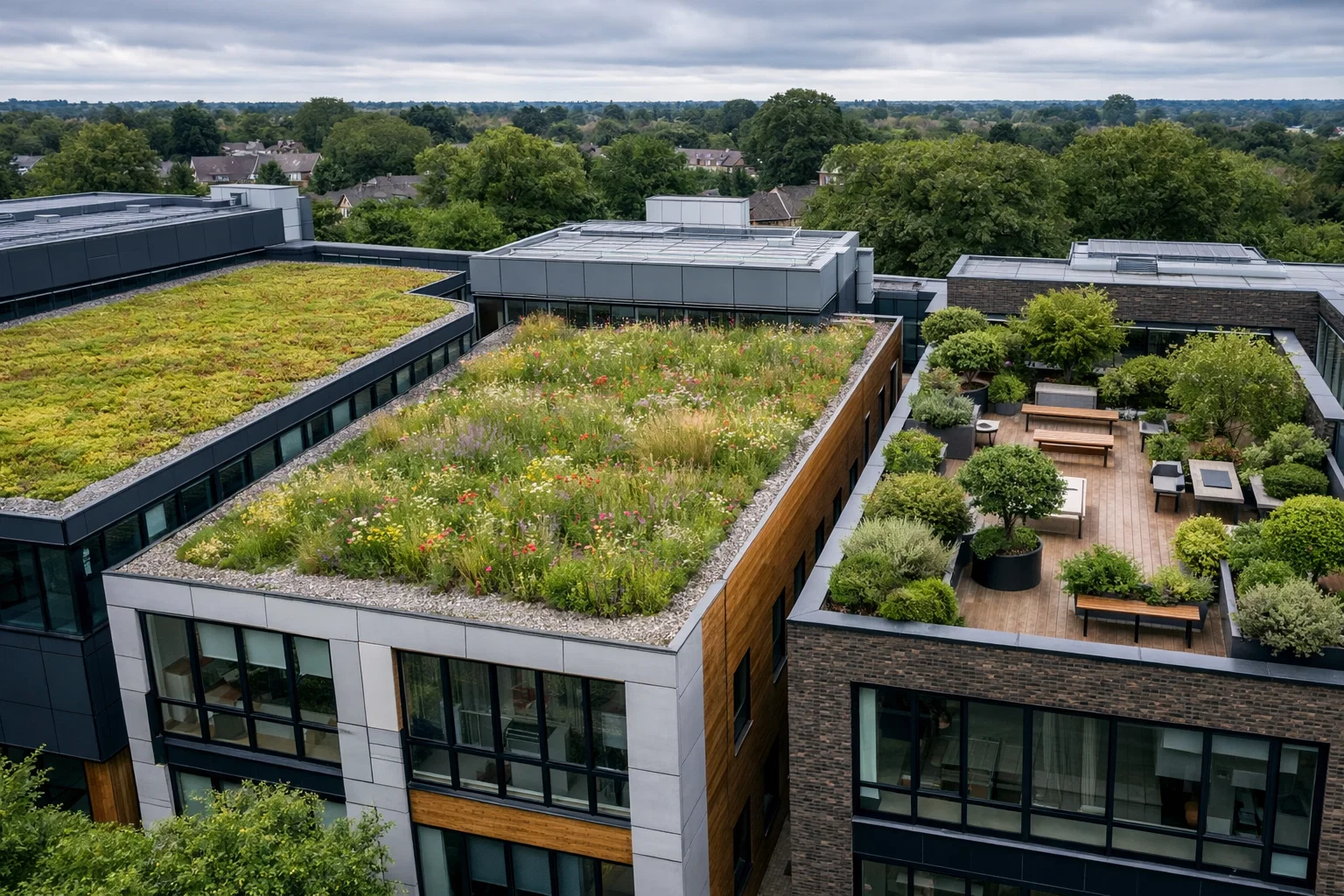
Green roof systems have become increasingly popular as demand for sustainable living grows. These eco-friendly roofs help businesses to meet their environmental goals and reduce their carbon footprint, and many UK councils now actively encourage or require them in new builds. There are three main types of green roof in use in the UK. The main differences between them are soil depth, weight, and maintenance requirements.
Extensive green roofs
Extensive green roofs are most commonly used. They are also the simplest, lightest, and lowest-maintenance roofs. Extensive roofs support resilient plants, such as moss, grass, and sedum. Their simplicity delivers a cost-effective and easy-to-maintain living system.
Extensive systems are designed for environmental use, not recreation. Their purpose is to manage stormwater and insulate the building for improved energy efficiency.
Intensive green roofs
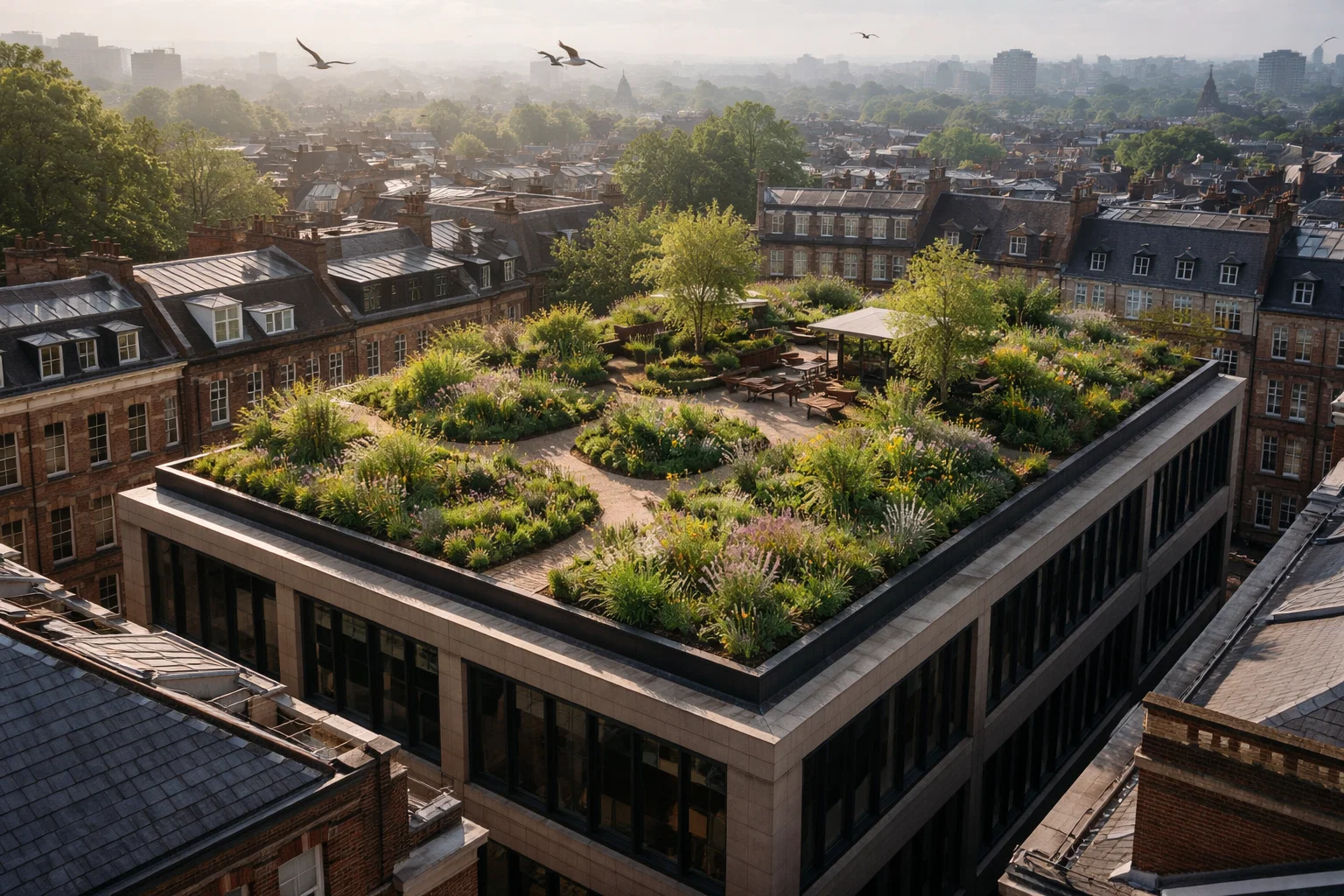
Intensive green roof systems are more complex, but they offer occupants the added benefit of roof gardens for relaxation and fresh air in urban areas.
These systems need a deeper, heavier soil layer than extensive systems because they support a much wider range of plants. Roof garden plants can include shrubs, flowers, and sometimes even small trees. These systems need more attention than extensive green systems, as they will require trimming, watering, and feeding, like any other garden plants.
The beauty of intensive green roofs is that they provide attractive, leisure areas where people can enjoy the fresh air among the plants.
Semi-intensive green roofs
As the name suggests, semi-intensive green roofs find the middle ground between extensive and intensive green roofs. These roofs have more soil per square metre than an extensive roof and less than an intensive green roof. People typically plant a mix of low shrubs, herbs, and wildflowers in these urban rooftop gardens.
How UK developers are using green roof systems
UK developers have embraced green roof systems, and these environmentally friendly green areas are creating biodiverse rooftop landscapes across the country. Here are just a few of the projects that contribute to the environmental well-being of the urban areas in the UK.
- Canary Wharf developments have taken the lead with intensive roofs featuring several landscaped gardens. The Canary Wharf Group boasts more than 8,000 square metres of green roofs.
- London’s Olympic Park has also adopted the green roof concept, with extensive green roof systems across various buildings. The construction has integrated solar panels, known as biosolar systems. It also supports a range of substrates and different plant species that attract pollinators and enhance biodiversity.
- Manchester City Centre has been installing blue-green roof projects. The Bloc building features the city’s first blue-green wildflower roof. Blue-green roofs combine careful water management through specialised water-retention methods with green-roof vegetation.
Green Roof Benefits
These systems offer building occupants and the city numerous benefits. Consider these:
Insulation performance
Green roof systems improve insulation. With better insulation, building occupants live and work in more comfortable indoor spaces. The interior stays cooler in summer and warmer in winter. The result is reduced demand for air conditioners and heaters, lowering energy consumption and the carbon footprint.
Reduced stormwater drainage burden
Green roofs soak up rainwater. The result is reduced runoff, limiting the amount of water entering the urban drainage system and reducing the risk of flooding, while improving water quality.
Increased biodiversity
Birds, bees and other insects often have no place to live in stark urban landscapes. Green roofs provide a natural habitat where these creatures can thrive. Many buildings with a green roof target threatened local birds and invertebrate species in a bid to improve environmental outcomes.
Organisations such as the UK Green Building Council continue to highlight the role green roofs play in improving biodiversity, managing stormwater and supporting more sustainable urban development.
Improved Air Quality
The vegetation grown in green roof systems cools the surrounding air, reducing the heat island effect commonly found in cities. The plants also serve as air filters, reducing impurities and increasing local oxygen levels.
Noise reduction
Green roof systems absorb urban noise, reducing both interior and exterior noise pollution.
Extended roof lifespan
The layers of soil and plants on the roof in a green system protect the roof materials from UV damage and extreme weather conditions, extending the roof’s lifespan.
Costs and Maintenance
Green roof installation costs vary substantially because these systems are tailored to the property’s needs and the owner’s preferences. A simple moss or sedum matting is vastly different from a fully fledged rooftop garden with flowers, shrubs, walkways, and benches.
Many property owners also explore blue roofs as part of sustainable roofing projects that improve rainwater management and environmental performance. The roofing company, when preparing a quotation, must account for the scale, structural requirements, and design objectives of the green roof.
Typical UK cost per m²
Extensive green roofs are much cheaper than intensive green roofs, while semi-intensive roofs offer a cost-effective compromise. An extensive one will cost between £50 and £100 per square metre.
Intensive green roofs, most often used on commercial buildings, typically cost £60 to £200 per square metre. Consult a roofing contractor with proven experience in green roof projects if you’re considering a green roof installation.
Maintenance frequency
All green roofs need some level of maintenance, but some need more attention than others.
Extensive green roofs are the simplest to maintain. These systems can normally get by with a bi-annual inspection. The inspection should include a thorough check of the drainage system, weed removal, and an assessment of vegetation coverage.
Semi-intensive green roof systems need a quarterly inspection. The maintenance requirements include regular reseeding and irrigation when necessary.
The maintenance of an intensive green roof system is in keeping with a landscaped garden. Rooftop gardens need regular pruning, lawn mowing, pest control and fertilisation. The irrigation system must be well-maintained.
Irrigation, soil depth and vegetation
Soil depth across green roof systems varies considerably; the deeper the soil, the more diverse the plants it can support. However, the more diverse the vegetation, the higher the maintenance and irrigation requirements.
Extensive green roofs
Extensive roofs are lightweight and designed for low-maintenance plants. They support low-maintenance plants such as succulent sedum, grasses, and moss in soil 6cm to 20 cm deep. Once established, extensive roofs need almost no irrigation. Sedum and moss are drought-tolerant. You will only need to tend to the sedum roof’s irrigation needs after a prolonged period with no rain.
Semi-intensive green roof systems
Semi-intensive roofs support wildflowers, herbs, and grasses in soil 12cm to 25cm deep. Drip irrigation systems often support semi-intensive systems and may require watering during dry or warm weather.
Intensive green systems
These green roofs have deep soil depths of 20cm or more. They can support a broad range of plants, including trees and shrubs, but the load on the roof is substantial. These systems require constant irrigation.
Best Green Roof Materials
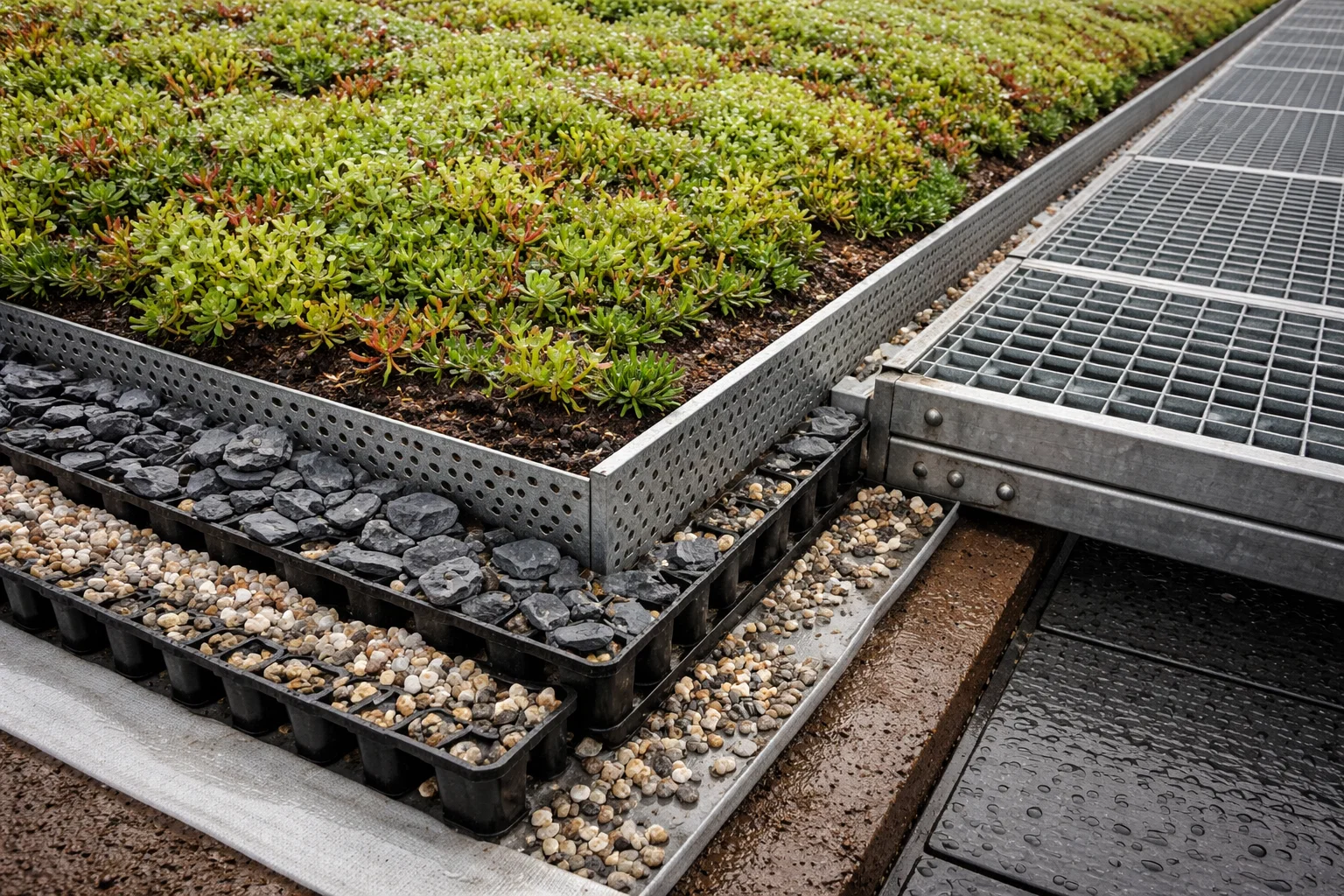
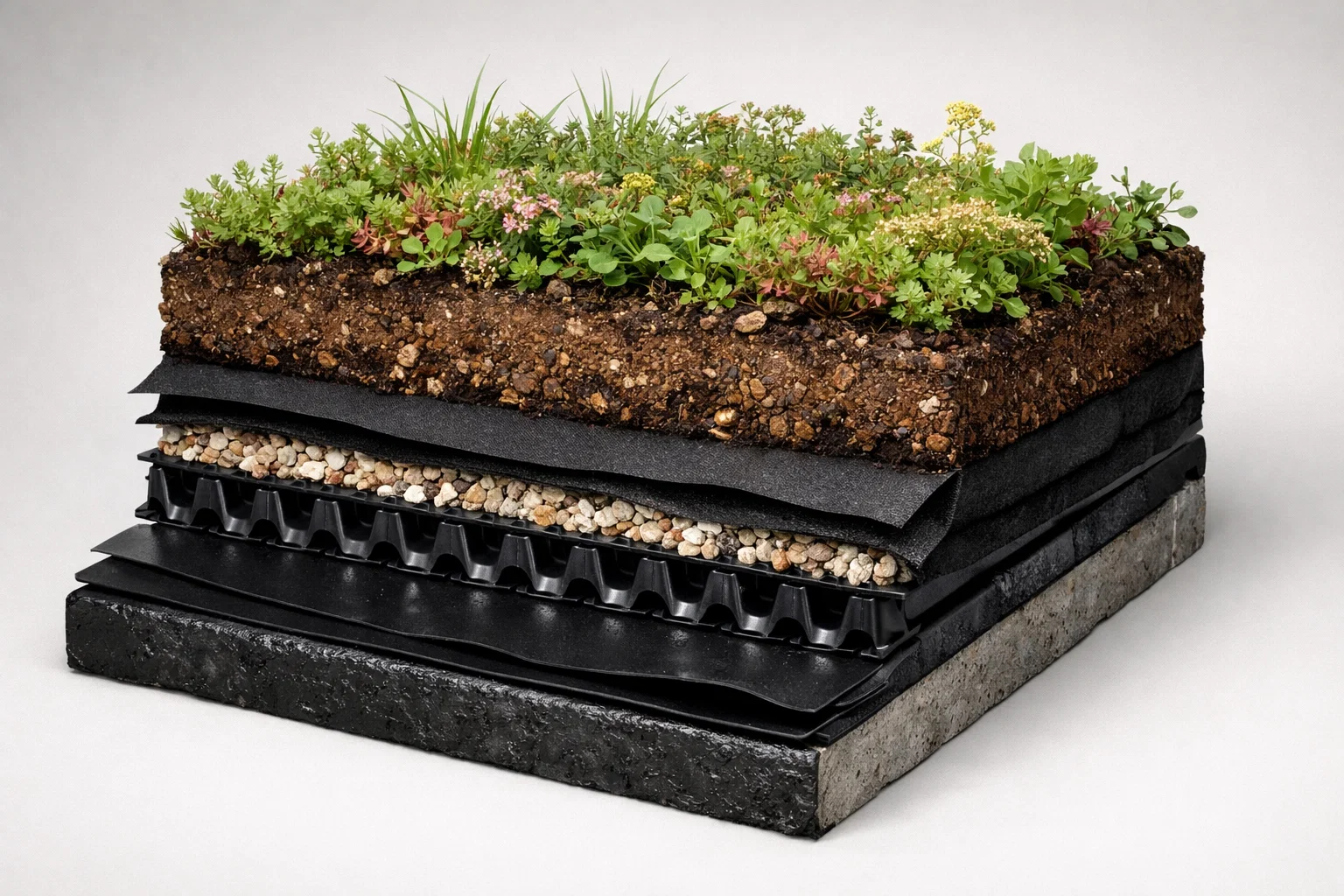
An effective green roof system needs environmentally friendly framing materials, top-quality waterproof membranes, a healthy growth medium and robust root barriers. The system is designed to support healthy plants while protecting the roof structure. A green roof consists of several layers.
A green roof relies on faultless waterproofing, which is why understanding commercial flat roof repairs is essential before any living roof system is installed. For additional insight on modern insulation options and energy efficiency, consider learning more about warm roofs.
Waterproofing membranes
Excellent waterproofing membranes designed for plants form a barrier between the roof surface and the soil, preventing water from penetrating the roofing material below. Synthetic rubber, high-quality felt systems, and thermoplastic membranes are widely accepted in the industry as reliable and effective barriers.
Flat Roofing Many green roof systems rely on high-performance waterproofing, with bituminous membranes widely regarded as the gold standard for commercial flat roofing.
Root barrier systems
Most roofing systems also include a root barrier over the waterproofing. This barrier consists of root-resistant polyethene or PVC sheeting. A high-grade PVC sheet is strong enough to prevent the roots of intensive roof systems from damaging the waterproofing.
Drainage
Drainage is one of the most important aspects of a green roof solution and is the leading cause of green roof failure. A good drainage system leads excess water away from the roof while ensuring that plants receive some of it. Some designs use lightweight gravel, while others use recycled plastics shaped like an egg crate. These systems protect the roots and prevent stagnant water from collecting on the surface.
Filter layer
The filter layer prevents soil from entering the drainage system and clogging it up. The filter layer is made from non-woven geotextile fabric.
The growing medium
The plants on green roofs do not grow in soil. It is too heavy. Instead, they’re supported by a nutrient-rich substrate of expanded shale or slate, crushed brick or clay and a small amount of organic matter. This material mix is lighter than soil and drains well while retaining enough moisture to keep the plants well hydrated.
Vegetation Layer
The top layer is, of course, the layer of vegetation. The plants will depend on the green roof application you have chosen.
Frames
Edge restraints and protection zones neaten the roof edges and protect weak points in the green system. They are usually made of aluminium or steel. The frames prevent the growing medium from moving and keep the drains clear.
How Green Roofs Perform in the Manchester Climate
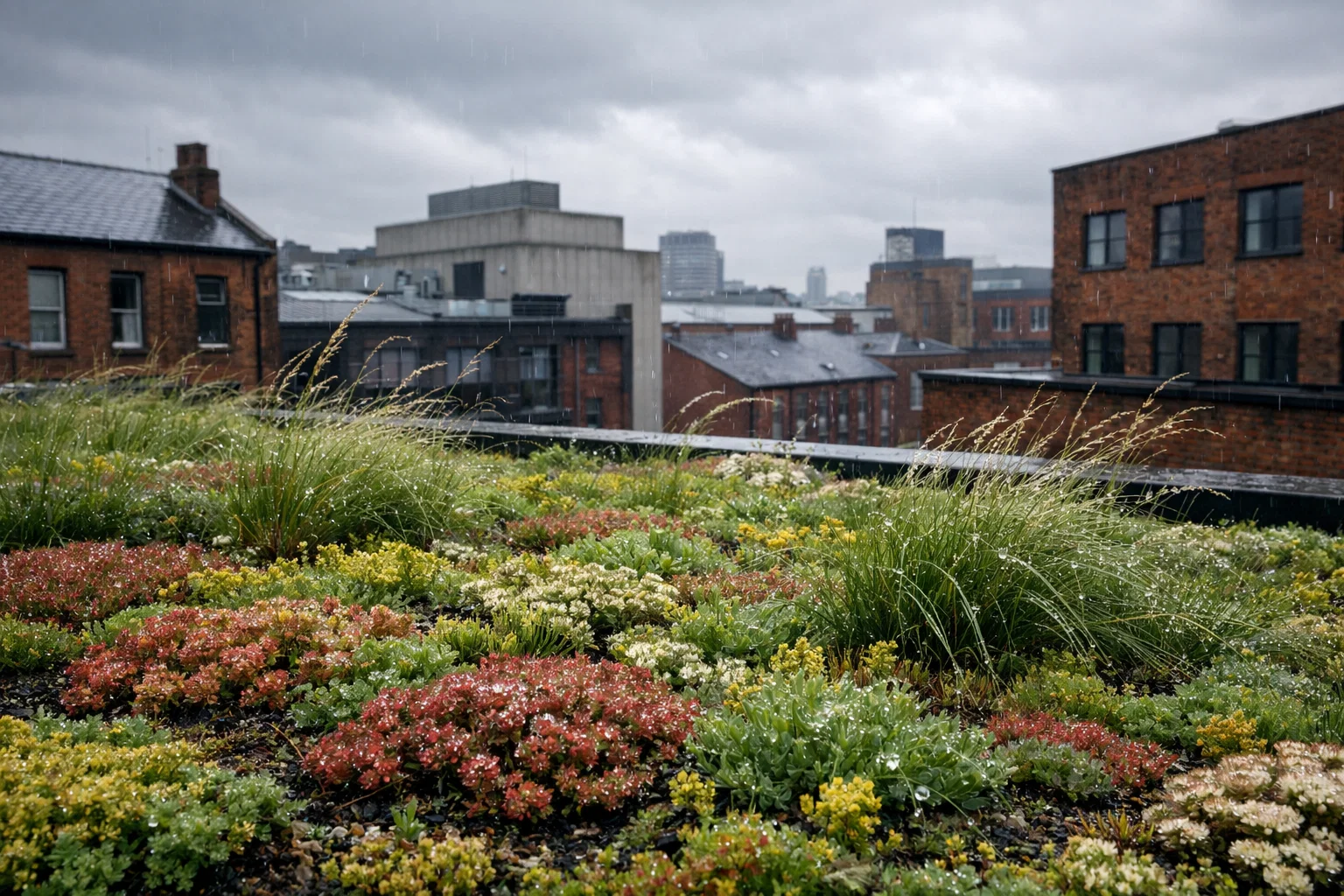
As any resident could tell you, Manchester is cool, wet and windy. With its regular rainfall, the city derives substantial benefits from green systems’ capacity to absorb water, as it reduces pressure on the drainage system. Regular rainfall supports living roof growth without the need for much supplemental irrigation. However, excellent drainage is necessary to prevent water buildup.
Manchester’s climate is mild in summer and cool in winter. Hardy plants, like sedum, cope well with frost. The insulation provided by the roof system ensures good thermal performance throughout the year.
Wind is the single biggest challenge for green roof systems in Manchester. Green roof installers manage the problem by using low-growing plants that can withstand high winds. Installers also use a slightly heavier growing medium and well-made, secured frames.
When a Green Roof is NOT Recommended
A green roof installation is not a solution for every building. Some buildings are just not suitable candidates for living roof systems. A green roof requires adequate structural support; unless the building can accommodate the weight, it is not feasible without considerable structural investment. There are also several other reasons why this type of project will not work. They’re discussed below:
The building cannot take the weight
Green roofs are heavy, particularly when wet. The roofs of many older buildings cannot bear the weight of a green roof system. Strengthening the structure, while possible, is also very expensive.
The roof has a steep slope
Plants and soil will slide down a roof with a steep gradient, which is why green roofs work best on gently pitched and flat roofs. A pitched roof with a slope of over 30° is considered too steep for a green installation. As it is, the roof installer will have to install extra fixing systems if the roof is too steep. These will increase the installation cost.
A structural engineer should confirm the roof’s suitability with respect to load-bearing capacity.
Poor waterproofing or drainage
A green roof requires a layer of effective waterproofing. It is best to avoid installing green roofs on roofs with problematic waterproofing membranes or poor drainage systems. Poor drainage can cause stagnant water puddles and root damage.
Limited roof access
Green roofs need maintenance, even if it’s only occasionally. Without access, the roof cannot thrive. Special equipment required to access the roof for maintenance will increase costs and health and safety risks.
A very dry or shaded roof
Plants need the right conditions to survive and thrive. Deep shade can stunt plant growth, while very exposed roofs can quickly dry the soil out.
New roof requirement on a tight budget
Green roofs cost more to install than a regular roof. You will need to arrange a structural inspection, and any shortcomings must be addressed through upgrades. Green roofs also require top-grade waterproofing. The owner will save money on energy costs over the long term, but those savings aren’t immediate.
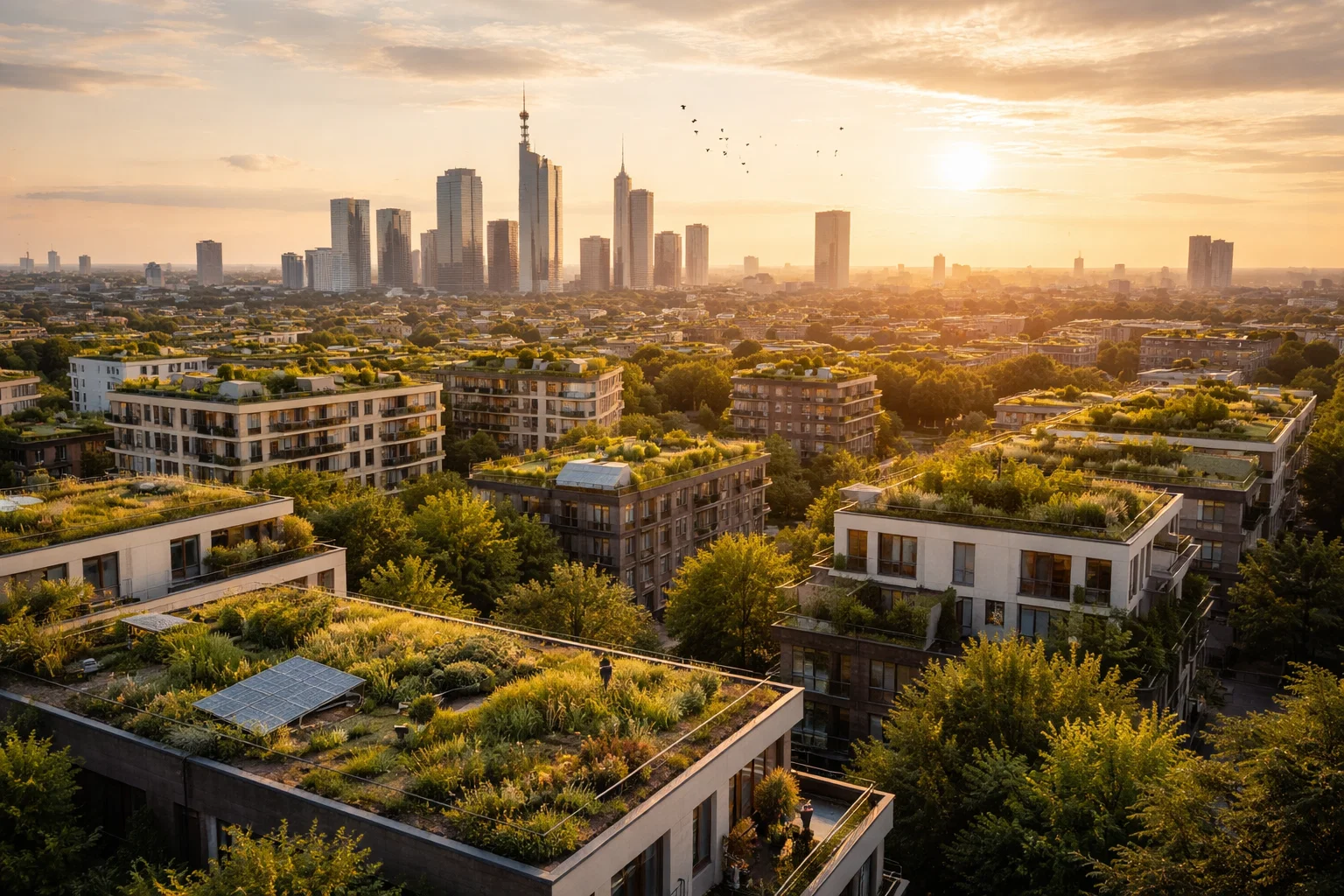
Looking After the Environment One Green Roof at a Time
The pressure on businesses to improve environmental performance will continue to increase, with many UK local authorities already showing a willingness to encourage and even mandate green roof solutions. These types of roof offer occupants, owners, and the city benefits through comfortable living and working environments, energy savings, and stormwater management. And developers in cities like London and Manchester are leading the way in demonstrating how important these systems are for improving biodiversity and sustainability.