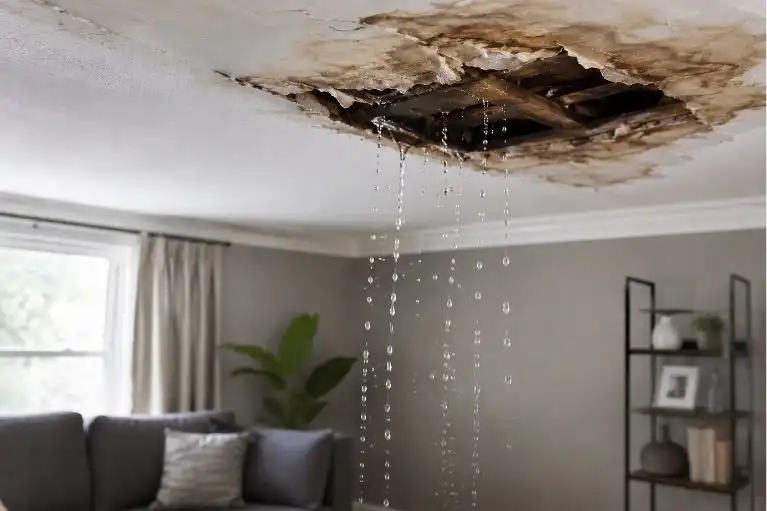
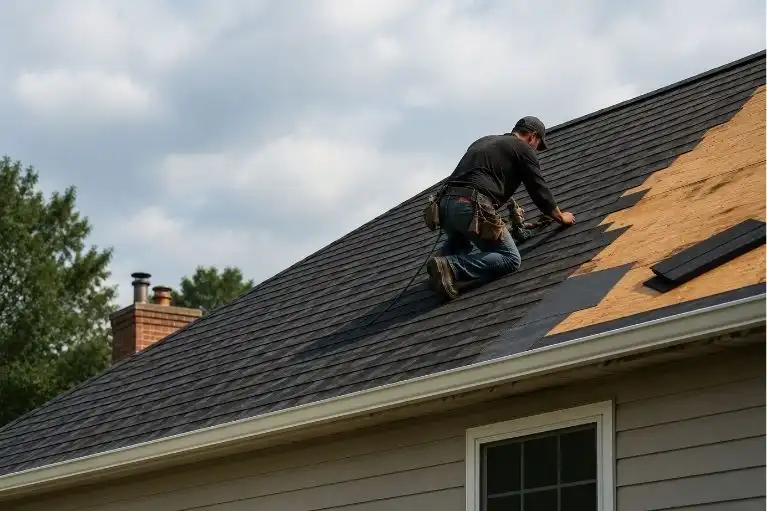
When your roof starts leaking, most homeowners think the smartest move is to grab a bucket, wait for the rain to stop, and sort it out later. But that delay could be the most expensive decision you make. What looks like a minor drip can escalate into damaged insulation, weakened ceiling joists, and mould growth within 24 to 48 hours, all of which cost significantly more to fix than the original leak.
According to the Insurance Information Institute (Triple-I), water damage and freezing account for nearly 24% of all home insurance claims, making it one of the most common and costly sources of residential property damage. So if the drips have already started, what do you know right now that’s actually going to stop this from becoming the most expensive repair your home has ever needed?
How Serious Is A Roof Leak?
A roof leak rarely stays small. What starts as a minor drip through a slipped tile or failed flashing can silently saturate insulation, rot structural timbers, and trigger mould growth within 24 to 48 hours, long before a ceiling stain appears. For Manchester homeowners dealing with roof leakage, the visible damage is almost always the last sign, not the first.
The financial stakes are significant. A minor emergency roof repair, a few slipped tiles or resealed flashing, typically costs between £300 and £1,200. Leave the same leaky roof unaddressed through a single Manchester winter and you could be facing ceiling replacement, timber treatment, and mould remediation pushing well beyond £5,000. Fast action is practical and it is the difference between a straightforward fix and a costly structural repair.
What to Do If Your Roof Is Leaking: Step-by-Step
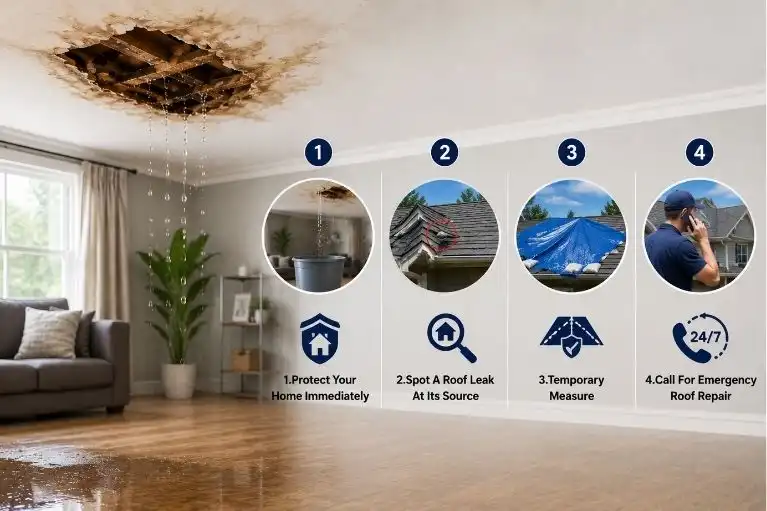
Here are the key steps to take when your roof is leaking to help minimise damage and address the problem quickly:
Step 1: Protect Your Home Immediately
The first priority when you discover a leaky roof is limiting interior damage, not fixing the roof. Act quickly:
- Move furniture and valuables: Move furniture, electronics, and valuables away from the drip zone and cover anything fixed with plastic sheeting.
- Contain the water: Place buckets or containers under active drips, line them with old towels to reduce splash.
- Relieve a bulging ceiling: If the ceiling is visibly sagging, water is pooling above it. Place a bucket below and carefully puncture the centre of the bulge with a screwdriver for a controlled release, this prevents a sudden structural collapse.
- Cut the power: Cut power to affected areas at the breaker if water is near any light fittings, sockets, or wiring.
- Document the damage: Photograph and video all damage before cleaning up, you will need this for an insurance claim.
Step 2: Spot A Roof Leak At Its Source
Knowing how to spot a roof leak accurately is the difference between a targeted repair and an expensive guessing game. Water travels along roof timbers before appearing as a ceiling stain, so the visible drip is rarely directly below the entry point.
- Access the loft first: During or just after rain, trace any wet trail uphill, the highest point of moisture is typically nearest the breach.
- Check rafters and insulation: Look for water stains, wet or compressed insulation, a damp patch, black mould patches, or active dripping on rafters and sarking felt.
- Mark the spot: Push a nail through the decking at the identified location so you can find it again from outside. If safe, have one person use a garden hose outside to mimic rainfall while another watches from the loft.
The majority of roof leaks originate at penetrations and transitions rather than in open field areas. Check these locations first:
- Lead flashings: Check around chimneys, skylights, and where the roof meets a vertical wall, as damaged flashing or loose flashing around chimneys or abutments is a leading cause of roof leakage.
- Plumbing vent collars: Inspect each roof vent carefully, as pipe flashings and rubber gaskets crack with age and are a common hidden entry point.
- Roof valleys: Where two slopes meet, water volume concentrates, inspect these carefully for splits or lifted felt.
- Missing, cracked, or lifted tiles: Even a single displaced slate or tile can allow significant water ingress during heavy rain.
- Blocked or overflowing gutters: Clogged gutters can push water back under the roof edge, and damp marks on outside walls near roof joints can also point to water ingress.
Step 3: Temporary Measures To Limit Water Damage Roof Repair Costs
A heavy-duty waterproof tarp is the most reliable emergency cover for temporary fixes, extend it past the ridge and anchor edges with screwed-down timber battens. For a small identified gap, roofing cement or roof sealant applied with a putty knife can create a temporary seal around visible cracks, a cracked tile, or lifted flashing. If you can safely reach the leak point in the loft, a piece of plywood and roofing felt sealed with roofing tape can temporarily divert water into a container below.
Do not walk on wet plywood, as it can be slippery and dangerous. These stopgap measures buy time while you arrange water damage roof repair by a qualified contractor. Even if a temporary fix holds, interior rot and mould often continue unseen behind ceilings and within roof voids long after the visible drip stops, so a professional inspection is essential regardless until the roofer arrives.
Step 4: Call For Emergency Roof Repair
Certain situations require emergency roof repair or urgent roof leak repair without delay rather than a temporary patch. Call a professional roofer immediately if:
- The roof is steep, high off the ground, wet, icy, or structurally compromised after storm damage
- The leak is large, spread across multiple ceiling areas, or you cannot locate the source
- You can see sagging or deformed roof decking, widespread rot, or disrupted structural timbers
- A bulging ceiling, widespread sagging, or signs of structural damage are present
- If water is affecting the consumer unit or nearby electrics, emergency attendance is required immediately
- There is visible mould growth, which requires proper remediation alongside the repair
- Your property has an older roof that may be approaching the end of its service life, repair may not be the appropriate solution
When selecting a contractor, use only NFRC-registered or Bauder Approved roofers. Bauder is a manufacturer-backed approval scheme for roofing contractors, approval provides measurable assurance on workmanship standards, installation quality, and access to genuine manufacturer warranties. Emergency callouts can carry additional costs, with emergency call-out fees typically ranging from £150 to £350.
Top Causes Of Roof Leaks In Manchester And The North-West
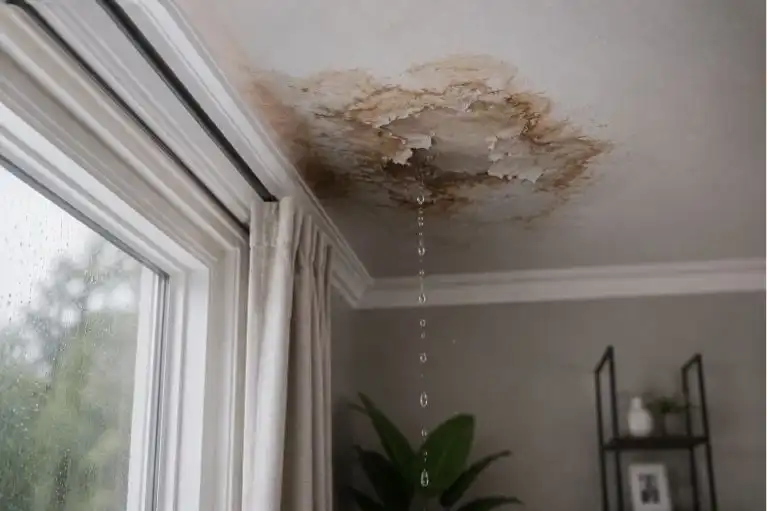
Here are some of the most common causes of roof leaks in Manchester and across the North-West, ranging from weather-related damage to aging roofing materials:
1. Storm-Damaged Or Missing Tiles
Greater Manchester is exposed to Atlantic weather systems, with the Met Office recording wind gusts exceeding 50mph during named storm events that can leave missing or damaged tiles and broken tiles that may look minor but still let in water.
Even a small leak after high winds should be repaired quickly to prevent further damage. These dislodge ridge tiles, hip tiles, and slates without visible warning. The ABI consistently reports a spike in storm-related home claims following each significant North-West weather event.
2. Lead Flashing And Chimney Failure
Deteriorated lead flashings around chimneys, skylights, and parapet walls, along with a damaged chimney, are among the most common causes of roof leakage across the North-West. The NFRC identifies flashing failure as a leading issue in period properties, and some chimney and flashing leaks result from components being incorrectly installed rather than simply ageing.
Victorian terraces across Ancoats, Stretford, and Chorlton often retain original lead work well past its service life. Chimney repairs typically cost between £300 and £800, depending on the scope of work.
3. Flat Roof Membrane Failure
Traditional mineral felt lasts 10–15 years; quality GRP and EPDM systems can exceed 25 years with correct installation. The NFRC identifies membrane failure at joints, upstands, and outlets as a significant cause of leaking rooftop problems. Ponding water accelerates degradation year-round in the North-West’s persistently wet climate.
4. Blocked Gutters And Overflowing Downpipes
Leaf debris and moss accumulate rapidly in the North-West’s damp conditions, so gutter cleaning helps stop overflow-related leaks. Blocked gutters overflow onto fascias and into wall cavities, a quiet but destructive form of roof leakage that can also leave leaking water stains and dampness on upper inside areas before the source is obvious.
The FMB identifies gutter failure as one of the most overlooked causes of water damage in older terraced housing. Schedule regular roof inspections to catch blocked drainage and similar issues before they turn into leaks.
5. Freeze-Thaw Damage To Tiles And Ridge Mortar
Manchester averages around 50 days of air frost per year according to the Met Office, and wind driven rain can force water through hairline defects and worsen freeze-thaw related leaks. Water trapped in hairline cracks expands and contracts repeatedly, fracturing tiles and cracking ridge mortar.
This freeze-thaw cycle is the primary accelerator of emergency roof repair call-outs on pre-1980s properties across Greater Manchester.
6. Ageing Roof Coverings
A significant proportion of North-West homes retain roof coverings from the 1950s through the 1980s. The NFRC states a well-maintained slate or tile roof can last 60–100+ years, but deferred maintenance accelerates failure rapidly and can expose the underlying roof structure to moisture.
Trim overhanging trees to reduce impact damage and abrasion on ageing coverings. A leaking rooftop on an older property is rarely a single isolated fault.
Get Emergency Leak Roof Repair In Manchester Today
A leaking rooftop left unaddressed through a Manchester winter can turn a straightforward fix into a costly structural repair. Whether you are dealing with active roof leakage, storm-damaged tiles, failed lead flashing, or a deteriorating flat roof membrane, getting the right contractor on site quickly is the single most effective way to limit water damage and protect your property.
If you have spotted a roof leak, it is important to work with experienced roofing specialists who understand the unique demands of North-West properties. At Best Roofers, we provide honest assessments, competitive quotes, and emergency roof repair across Greater Manchester. Check out our Emergency Repair services to view the full range. Contact us at bestroofers.uk@gmail.com or call 0161 951 7958, the sooner you act on a leaking roof, the less it will cost you.
Frequently Asked Questions About Roof Leaks In Manchester
Does house insurance cover roof leaks?
Most standard home insurance policies cover roof leakage caused by a sudden, accidental event, storm damage, fallen debris, or high winds. They typically exclude gradual deterioration or a leaky roof resulting from lack of maintenance. The ABI advises reviewing your policy’s wear-and-tear exclusions before making a claim.
Document all damage thoroughly, contact your insurance company promptly, mitigate further water ingress, and keep all receipts. Insurers may reduce or reject claims where reasonable action was not taken to prevent further water damage roof repair costs.
How to fix a leaking roof?
Fixing a leaking rooftop permanently requires identifying the exact source first, which is rarely directly above the interior drip. Once located, solutions range from replacing a single roof tile or resealing lead flashing to full membrane replacement on flat roofs. Replacing one damaged tile is often fairly straightforward, but safe access and matching materials still matter.
For anything beyond a minor repair, always use an NFRC-registered or Bauder Approved contractor or other qualified roofer. Attempting to fix a leaky roof without proper access equipment or roofing knowledge risks both personal injury and making the underlying damage worse.
How to fix a leaking roof from the inside?
A temporary interior fix buys time while you arrange emergency roof repair. If you can safely access the loft or roof space, apply roofing felt or plywood over the breach, sealed with bitumen tape, to divert water into a container.
This does not address the external cause of roof leakage, it simply slows interior damage and can still damage insulation. Knowing how to spot a roof leak from inside the loft, by tracing wet rafters uphill, helps pinpoint the exact external entry point for your contractor.
How much would it cost to repair a leaking roof?
Costs vary depending on the extent of damage and roof type. A minor emergency roof repair, replacing slipped tiles or resealing flashing, typically costs £300–£1,200 in the North-West. Significant water damage roof repair involving structural timbers, insulation replacement, or flat roof membrane work can reach £3,000–£6,000 or more.
Leaving a leaky roof unaddressed through a Manchester winter almost always pushes costs into the higher range, making early intervention the most cost-effective decision.