More UK businesses are taking sustainability seriously, not just to meet regulations but to future-proof their buildings and cut long-term costs. While many focus on reducing energy use inside the property, few realise the roof offers one of the biggest opportunities for improvement. Green and blue roof systems are fast becoming the go-to choice for businesses looking to lower their environmental impact while boosting the performance of their commercial flat roofing. Whether you want to improve energy efficiency, manage rainwater more effectively, or simply add value to your property, these systems are worth a closer look.
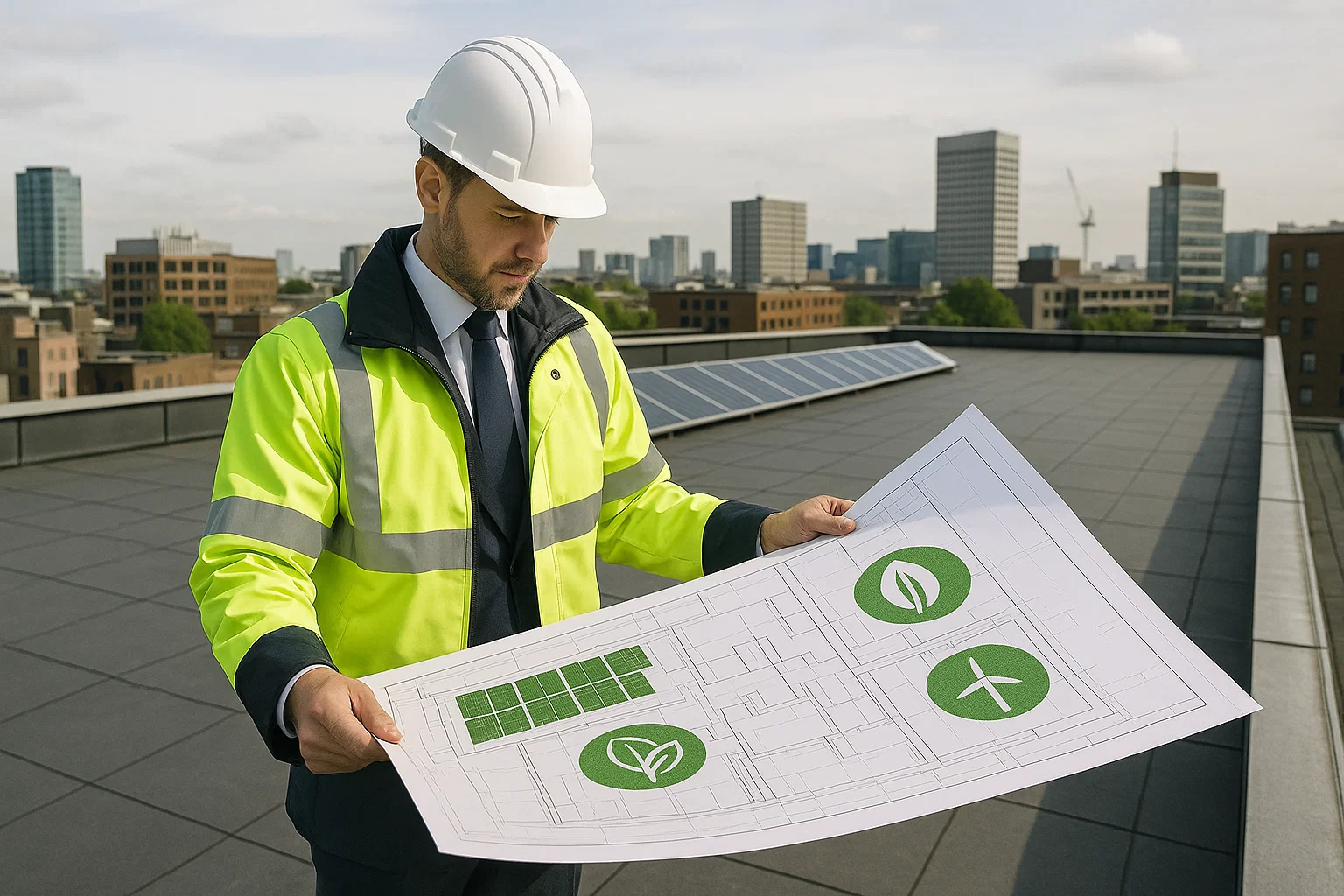
Why Roofing Is Part of the Sustainability Conversation
With climate change moving up the agenda for UK businesses, it’s no surprise that companies are looking for new ways to build sustainably. While energy-saving improvements often focus on lighting or heating, the roof is one of the most overlooked assets when it comes to making a real difference.
Large industrial buildings and commercial spaces offer huge potential for sustainable upgrades. That’s where commercial flat roofing comes in. Whether you manage a retail unit, a logistics centre or an office block, your flat roof could do far more than just keep the rain out. Green and blue roof systems are gaining popularity across urban areas, offering practical benefits for the environment and your bottom line.
What Is a Green Roof?
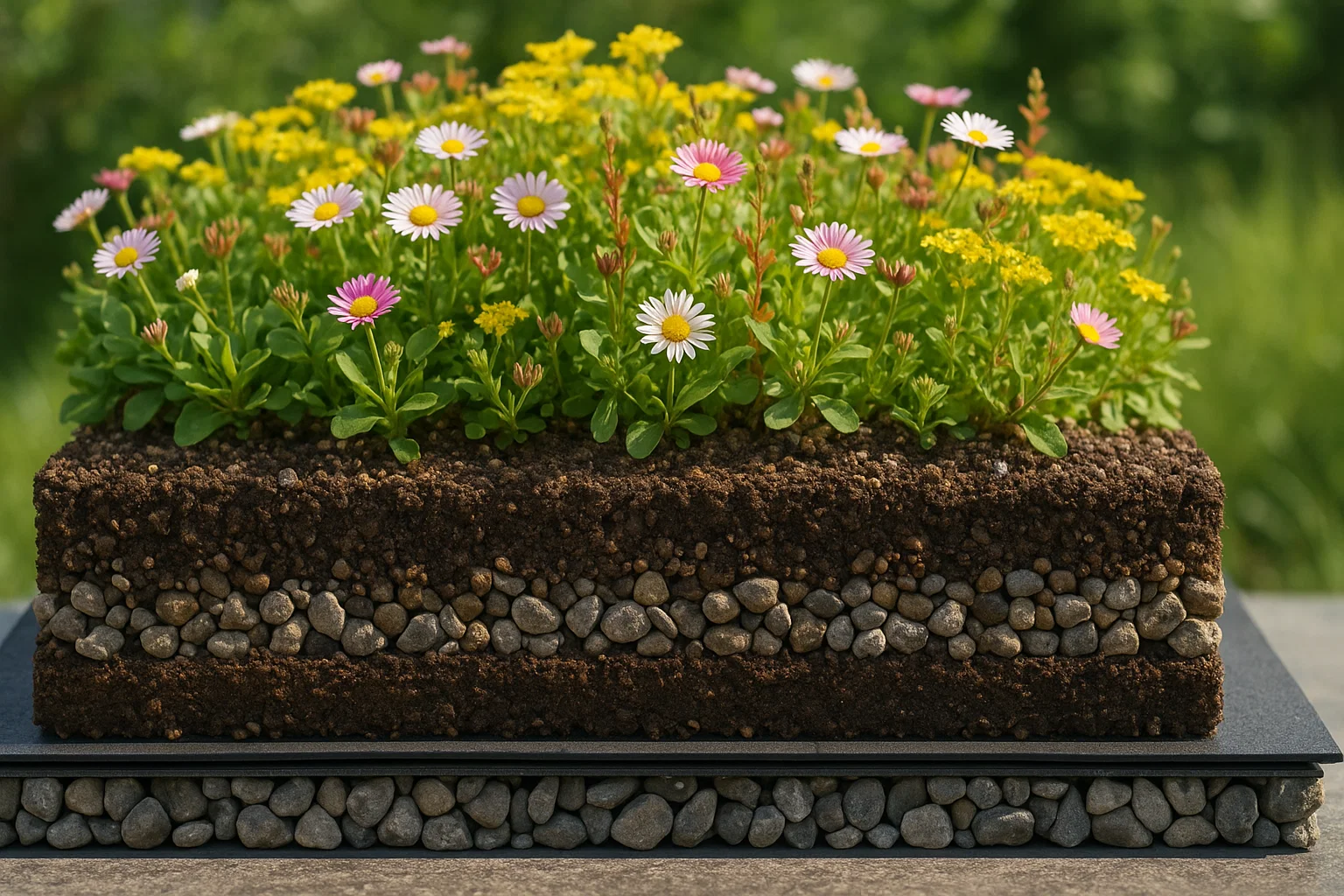
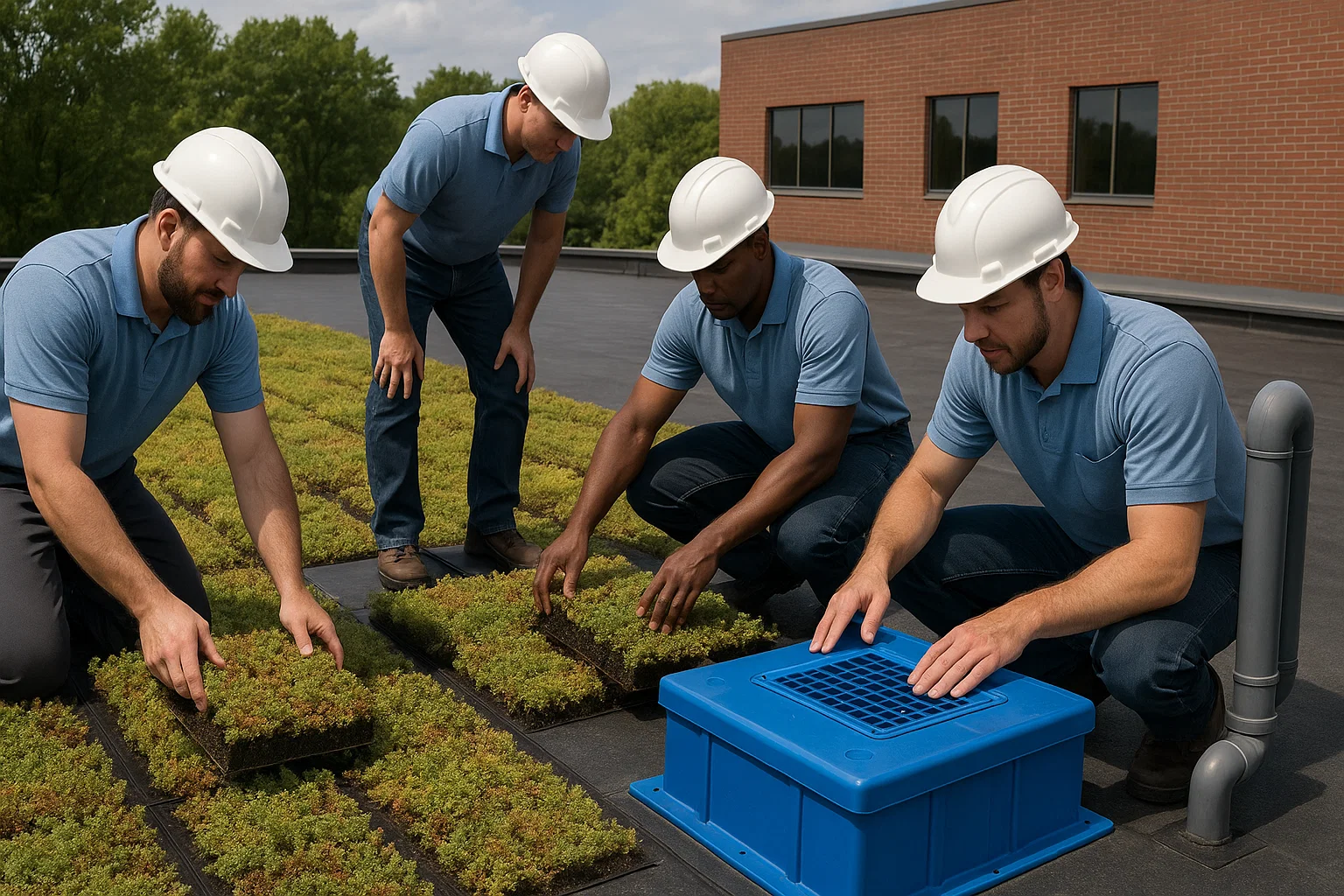
A green roof turns a standard rooftop into a living landscape. You may have seen them before on city buildings or eco-friendly developments. These rooftops are carefully built with layers of roofing materials like a waterproof membrane, drainage layers and a special growing medium to support plants.
Green roofs are not only about aesthetic appeal, although they certainly transform dull rooftops into something much more inviting. They also offer insulation, reducing the need for artificial heating and cooling. By covering your flat roof with vegetation, you add a natural barrier that helps to regulate indoor temperatures.
How Green Roofs Support Energy and Water Management
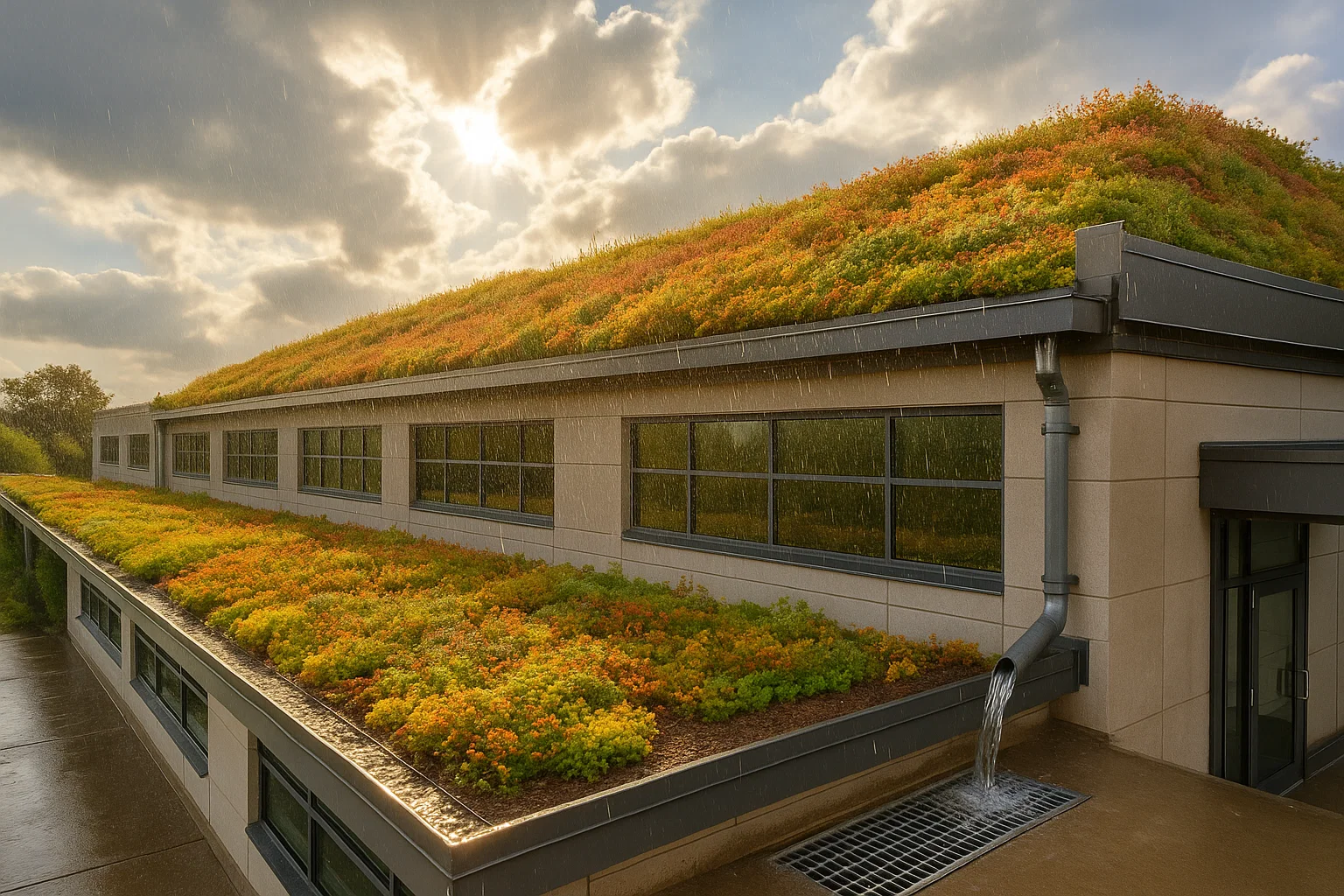
One of the most important features of a green roof is its ability to manage water. The plant layer and growing medium absorb rainfall, slowing down the flow into the building’s drainage system. This helps reduce the risk of flooding in built-up urban areas, which is becoming increasingly important as climate change leads to more extreme weather.
On top of that, green roofs provide valuable habitats for wildlife, improve air quality and boost employee wellbeing by turning unused spaces into natural environments. These benefits make them particularly popular on commercial buildings looking to achieve environmental certifications or improve their public image.
What Is a Blue Roof?
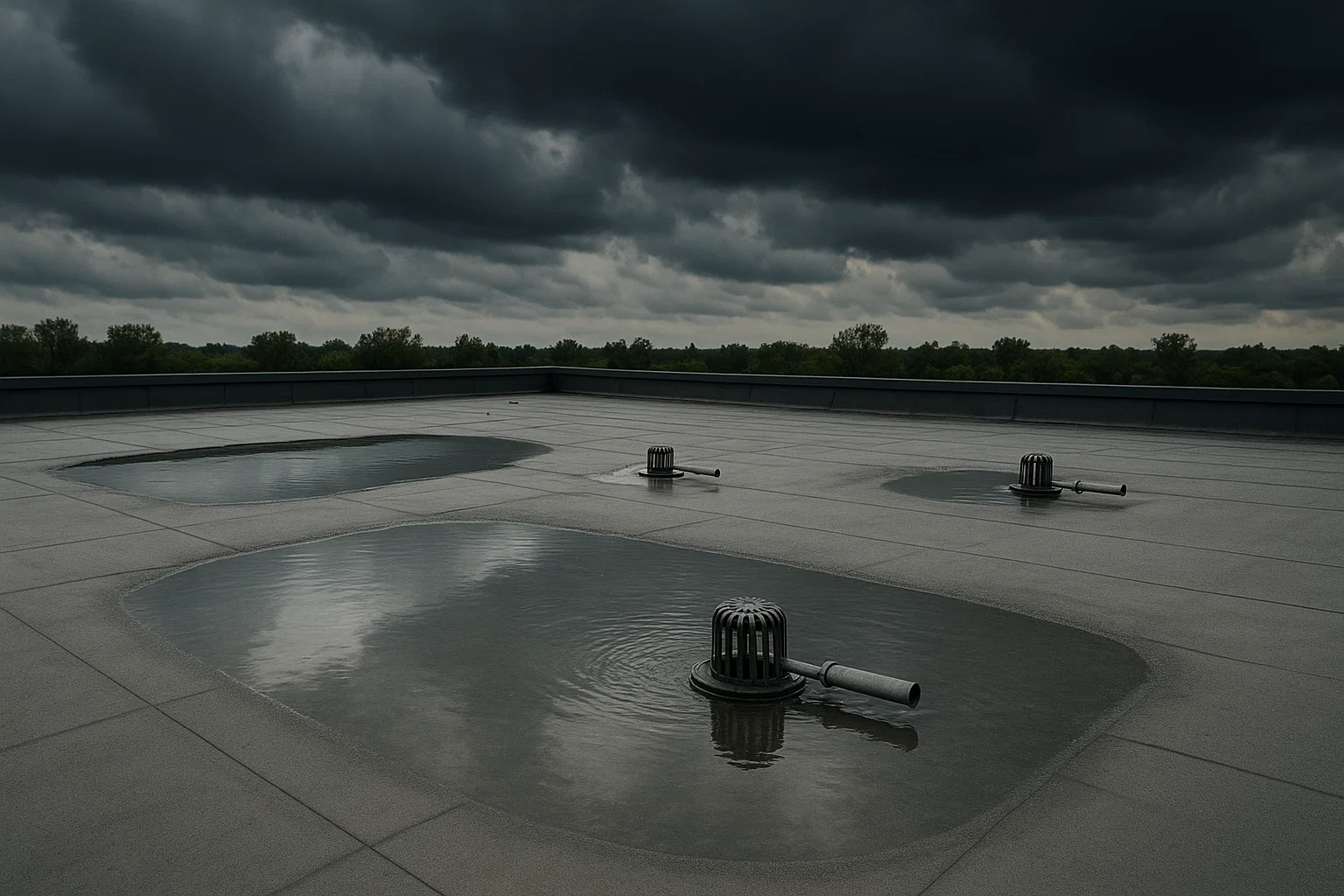
While green roofs grab the headlines, blue roofs are becoming equally important for commercial developments. A blue roof system is designed to manage rainwater by holding it on the roof temporarily, rather than allowing it to flow straight into the drainage system.
The structure of a blue roof includes layers that store water safely, controlling how quickly it drains away. This kind of water storage is essential for meeting Sustainable Drainage System (SuDS) requirements, which apply to many new builds and refurbishment projects.
The Practical Benefits of Blue Roof Systems
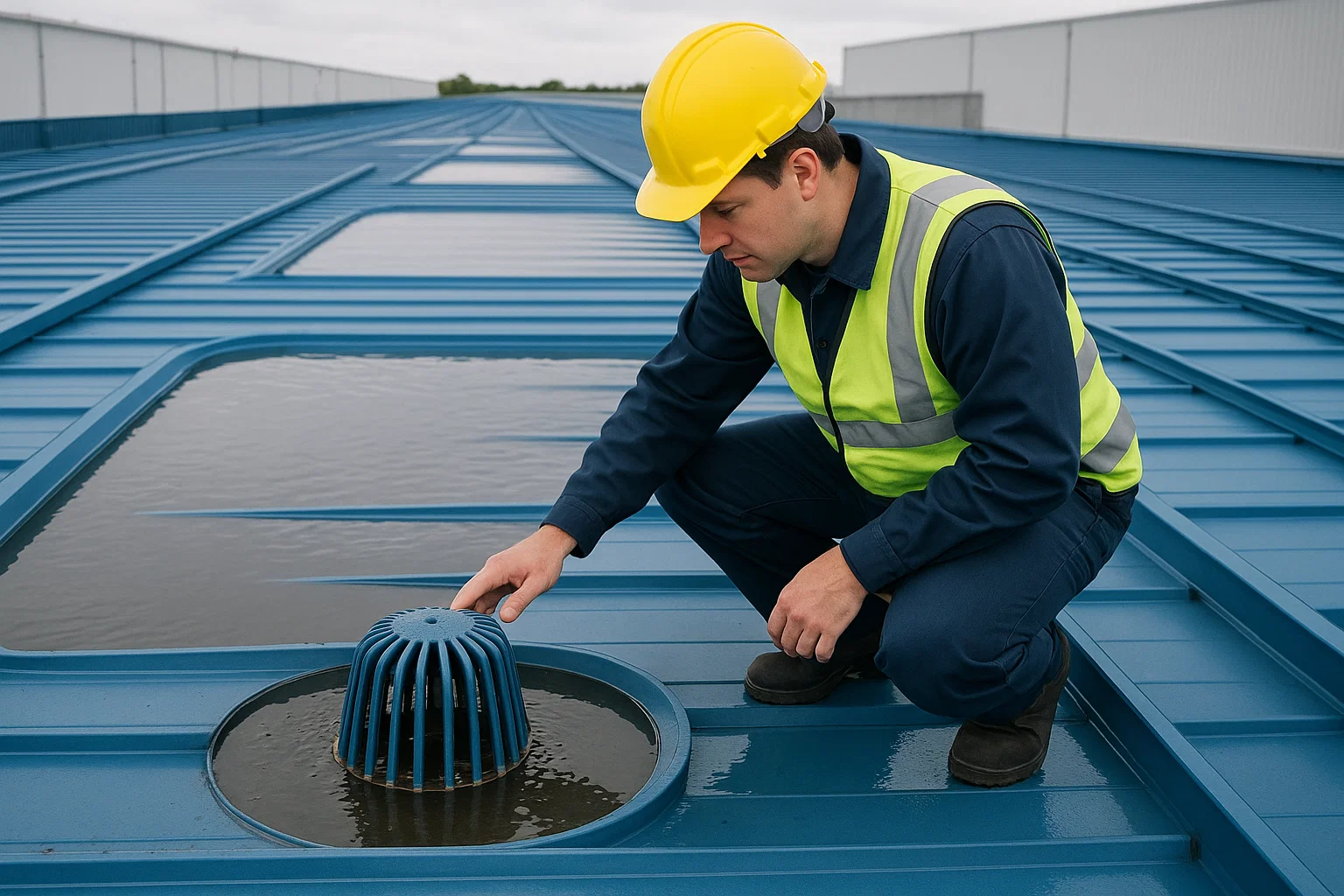
A blue roof doesn’t change the appearance of the building, but it plays a vital role in protecting it from water damage. By slowing down drainage, it helps prevent flooding during heavy rain, making it a smart choice for properties in flood-prone areas.
This controlled rainwater storage reduces pressure on local drainage networks, which is especially useful in densely populated urban areas. It’s a simple yet highly effective way to future-proof your commercial flat roofing against changing weather patterns.
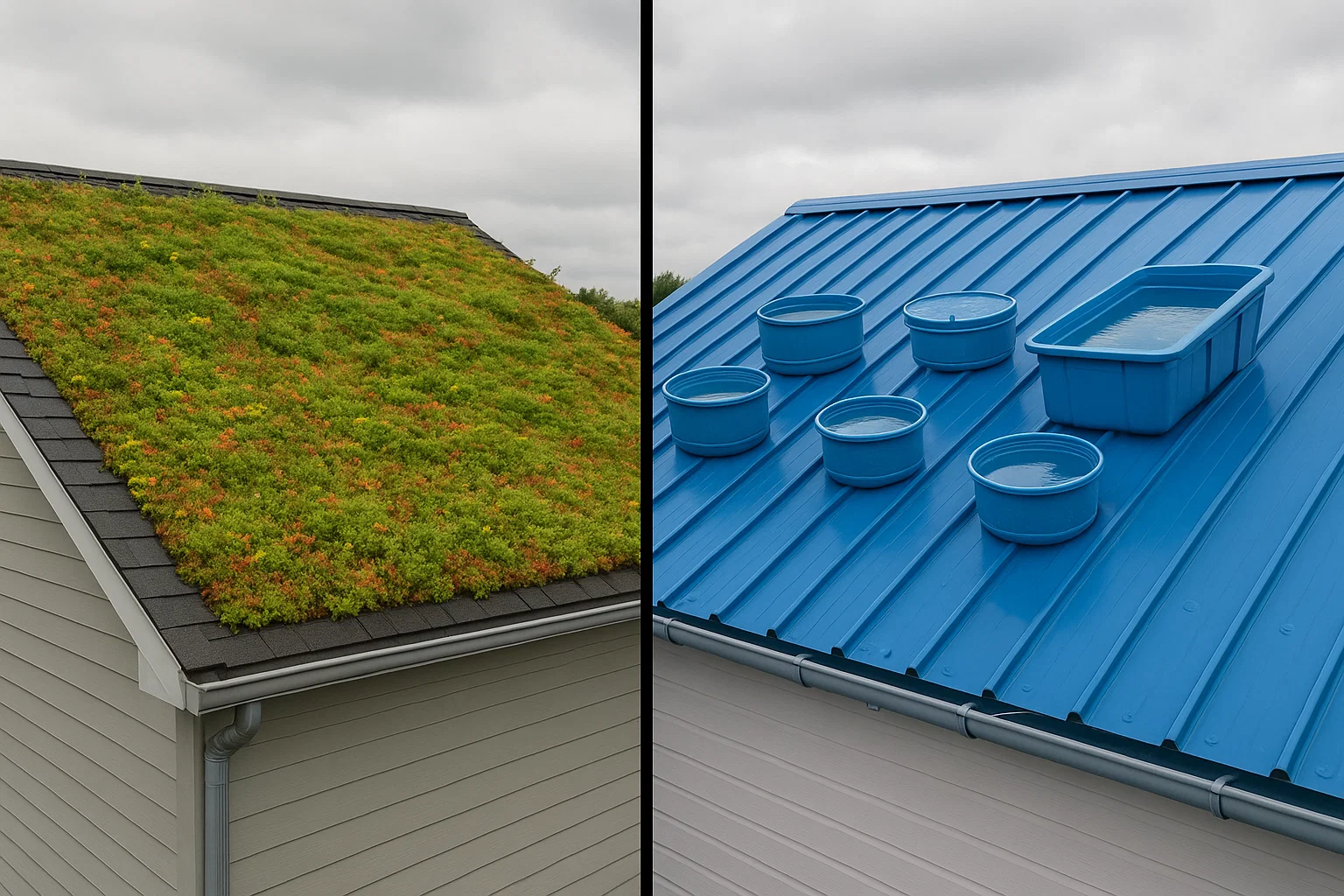
Green Roof vs Blue Roof: What’s the Difference?
While both systems offer sustainability benefits, they work in different ways. A green roof focuses on energy savings, biodiversity and visual impact. A blue roof is all about managing water to prevent flooding.
However, you don’t always have to choose one over the other. Many businesses are now installing blue roof systems beneath a green roof layer, combining the benefits of both. This offers water storage and drainage control, along with the added aesthetic appeal and insulation of a green roof.
Explore UKGBC’s smart blue-green roof case study to see how real businesses are embracing sustainable, dual-purpose roofing systems https://ukgbc.org/resources/smart-blue-green-roof/
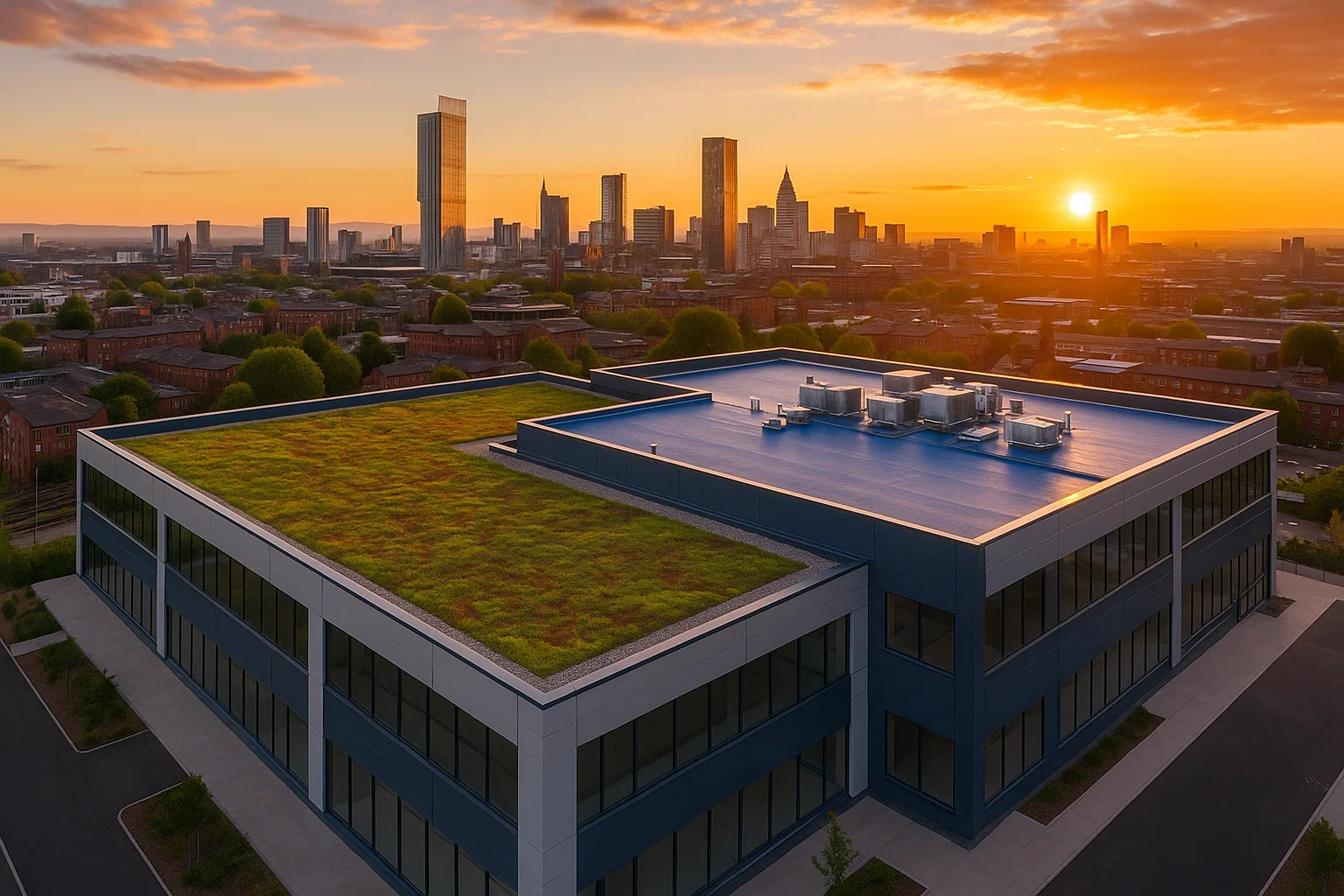
Why Flat Roofs Are Ideal for Green and Blue Roof Systems
Most flat roof systems on commercial buildings offer the perfect platform for these sustainable upgrades. Whether you’re working with felt, single ply or other flat roof materials, both green and blue roofs can often be installed as part of a new build or retrofit project.
By upgrading your flat roof waterproofing, you create a solid foundation for either system. This ensures that your building stays dry and protected while delivering all the added environmental benefits.
Even green and blue roofs need regular inspection, see our full maintenance guide for commercial properties. Flat Roofs in Commercial Properties -10 Essential Maintenance Tips
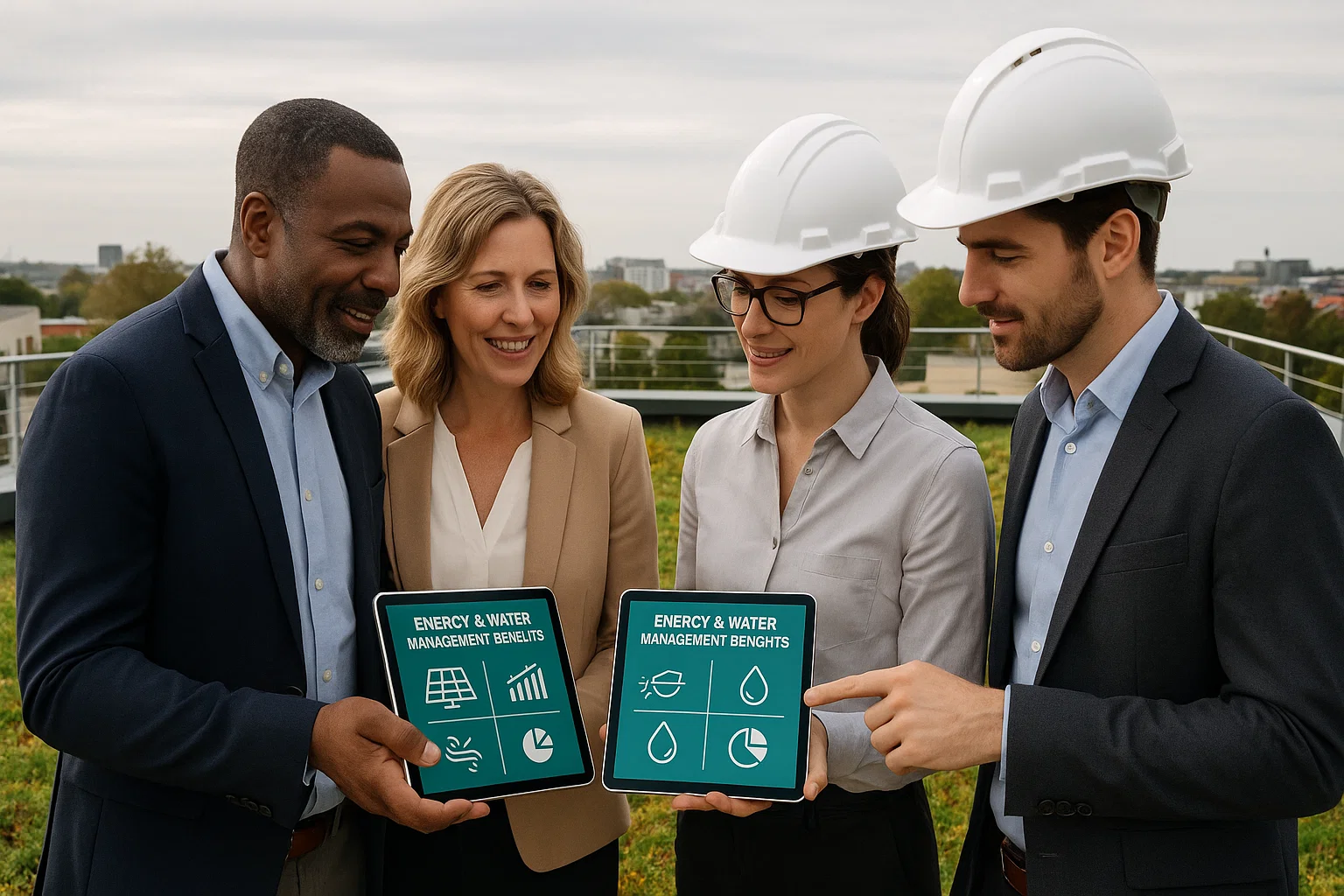
Features and Benefits for Commercial Properties
Green roofs provide natural insulation, helping to regulate indoor temperatures and reduce energy bills. They also reduce noise pollution, which is particularly useful for industrial buildings or properties near busy roads.
In contrast, blue roof systems protect your building from water damage by controlling the flow of rainwater. This helps you meet SuDS requirements, avoid costly repairs and reduce your environmental impact.
Both systems can also extend the life of your commercial flat roofing by shielding it from UV rays and temperature extremes. This reduces the need for flat roof repairs over time, saving money on maintenance.
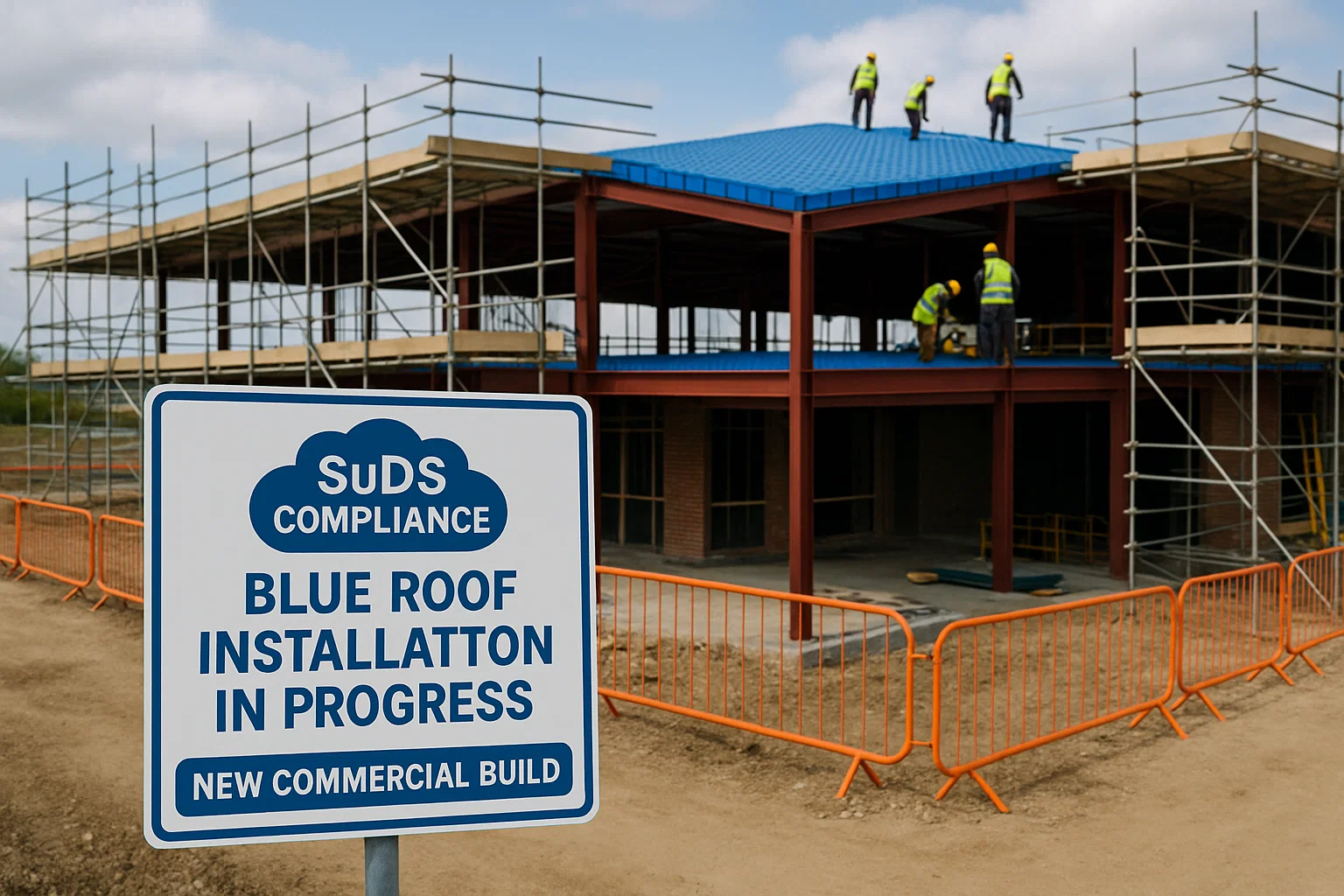
Planning for SuDS and Water Management Compliance
Meeting SuDS compliance is becoming a key part of commercial roofing projects. Whether you choose a green, blue, or combined system, managing rainwater storage and drainage is no longer optional for many new builds.
Working with a contractor that understands these requirements can help you avoid delays and ensure your project meets all legal standards. Best Roofers can guide you through this process, offering solutions that are both practical and sustainable.
Why Work with Best Roofers for Green and Blue Roof Systems
At Best Roofers , we offer more than just felt roofing expertise. We provide complete solutions for commercial flat roofing, including the design and installation of green roof and blue roof systems. You can also browse our expert warm roofs, which combine superior insulation with energy efficiency to enhance building performance.
We partner with trusted suppliers like Bauder to deliver high-quality systems that meet the demands of modern commercial buildings. Whether you need to upgrade your flat roof waterproofing, install new flat roof materials, or improve your building’s environmental performance, we can help.
With our national network of suppliers and installers, we’re perfectly placed to deliver sustainable roofing projects across Manchester, the North West and beyond.
Final Thoughts
Choosing a green roof, blue roof, or combined system offers more than just environmental benefits. These solutions can improve energy efficiency, manage rainwater and protect your building for years to come.
If you’re looking to upgrade your flat roof systems or planning a new build, now is the perfect time to explore sustainable roofing options. Contact Best Roofers today to find out how we can help you future-proof your property and achieve your environmental goals.