Your choice of roofing materials can make or break the look, strength, and long-term value of your home. From timeless clay tiles to innovative synthetic systems, the options available to UK homeowners in 2026 have never been more diverse. Whether you’re replacing a few worn tiles or planning a full roof replacement project, understanding the pros and cons of each material helps you invest wisely.
In 2026, UK homeowners have more choices than ever. From classic clay to modern metal roofing, today’s market blends tradition, technology, and sustainability. Which are the roofing materials UK homeowners are choosing most – and why?
At Best Roofers Manchester, we’ve compared the top five options for cost, durability, and style to help you choose wisely before you replace your roof.
Clay Tiles: Classic Charm and Lasting Quality
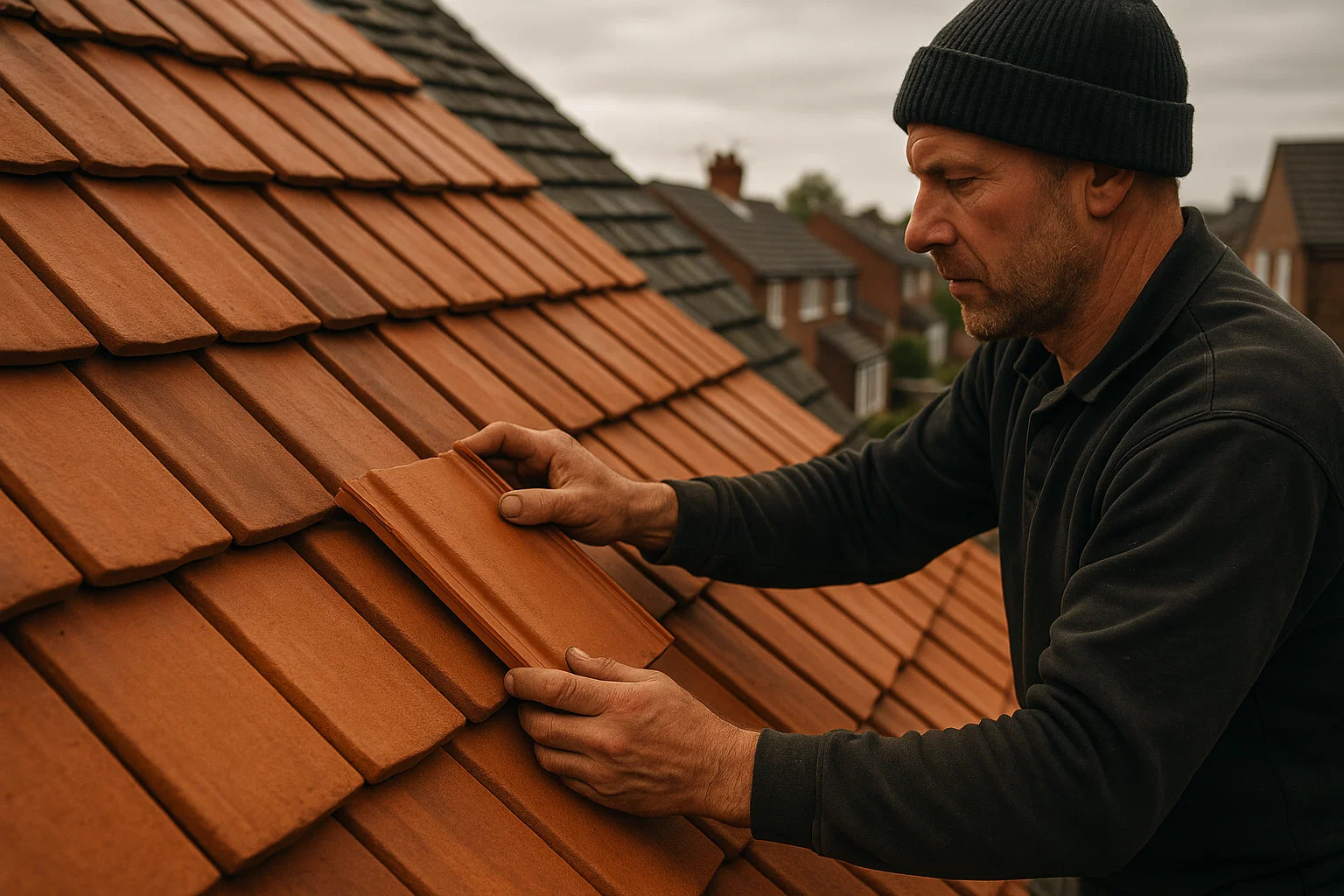
Clay tiles have been a favourite in the UK for generations. They’re made from natural materials, giving them a rich colour and texture that suits traditional and modern homes alike. When properly installed, clay tiles can last 60 years or more, making them a sound long-term investment.
Their fire-resistant properties make them ideal for both safety and longevity, while their dense structure helps with insulation. They’re particularly well-suited to pitched roofs and homes with a strong roof structure, as they are among the heavier roofing options.
Modern interlocking roof tiles in clay styles have improved water resistance and are quicker to install, cutting down labour costs. If maintained well, clay tiles are one of the most reliable roofing materials available today.
Average new roof cost (2026): £70–£100 per m² installed.
Concrete Roof Tiles: Affordable Strength for Every Home
Concrete tiles continue to be one of the most common roofing materials UK homeowners choose, thanks to their reliability and affordability. They provide a similar look to clay or slate while keeping overall roof costs down.
Modern concrete roof tiles come in various shapes, colours and finishes, including interlocking roof tiles that create a tight seal against rain and wind. They’re incredibly versatile, fitting both modern extensions and traditional properties.
The main advantage is price and availability. Concrete is easy to produce and repair, making it ideal for families working to a budget or dealing with missing tiles on older roofs. However, concrete tiles are heavy and may not suit weaker roof frames.
Concrete’s strength comes with slightly higher maintenance costs, as they can weather faster than clay or slate. Even so, they offer solid value and dependable protection for decades.
Average new roof costs (2026): £50–£80 per m² installed.
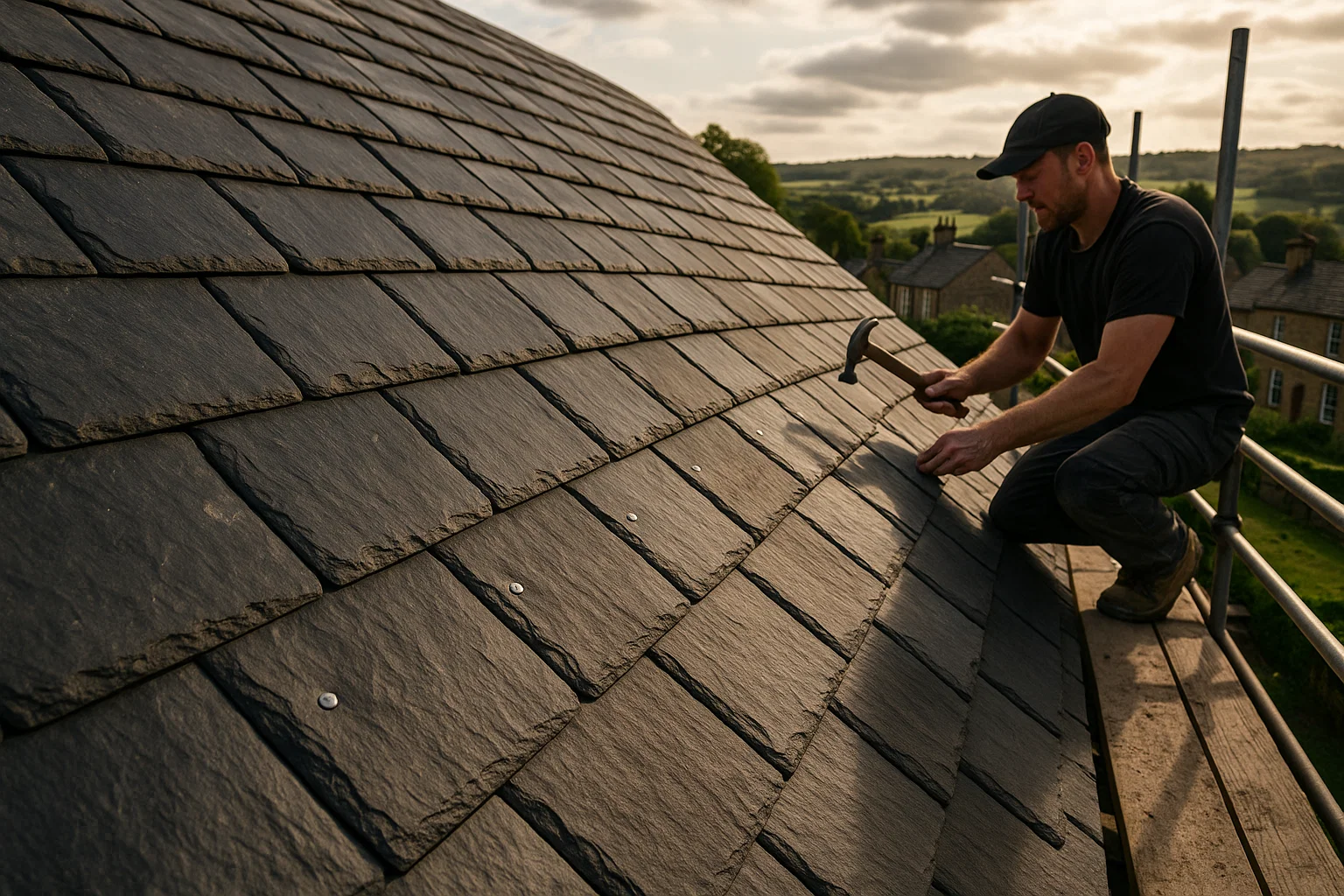
Natural Slate: Timeless Style and Unmatched Durability
If you’re looking for elegance and endurance, natural slate remains the gold standard. It’s one of the most durable roofing materials on the market, with a lifespan exceeding 100 years. The rich, dark tones of slate give homes an unmistakably high-end finish, and its ability to withstand the British climate makes it ideal for long-term use.
Slate roofs are fire resistant, eco-friendly, and low-maintenance. They require little more than occasional inspection to stay watertight. The natural weight of slate means it must be installed by an experienced roofing contractor, and the roofing project may involve reinforcing the structure if you’re upgrading from lighter materials.
When comparing tile roof vs slate roof, slate clearly wins for longevity and visual appeal, though clay and concrete offer more affordable upfront costs.
Average new roof cost (2026): £90–£130 per m² installed, depending on the slate’s origin and grade.
Metal Roofing: Modern Durability Meets Lightweight Design
Metal roofing is one of the fastest-growing trends in the UK housing market. Whether it’s steel, zinc, or aluminium, metal offers unbeatable strength while remaining lightweight. It’s a perfect fit for homes with timber frames or extensions where heavy tiles aren’t an option.
The sleek appearance suits both modern and eco-friendly homes. Metal roofs are low-maintenance, recyclable, and extremely durable, lasting 50 years or more with minimal upkeep. They’re also fire resistant, making them ideal for safety-conscious homeowners.
Metal is reflective, helping reduce overheating in summer while improving insulation in winter. For those exploring renewable options, it’s also compatible with solar panels and green roofs, helping reduce carbon footprint and running costs.
While the upfront costs can be higher than concrete or clay, lower maintenance costs and longer lifespan make it excellent long-term value.
Average new roof costs (2026): £80–£120 per m² installed.
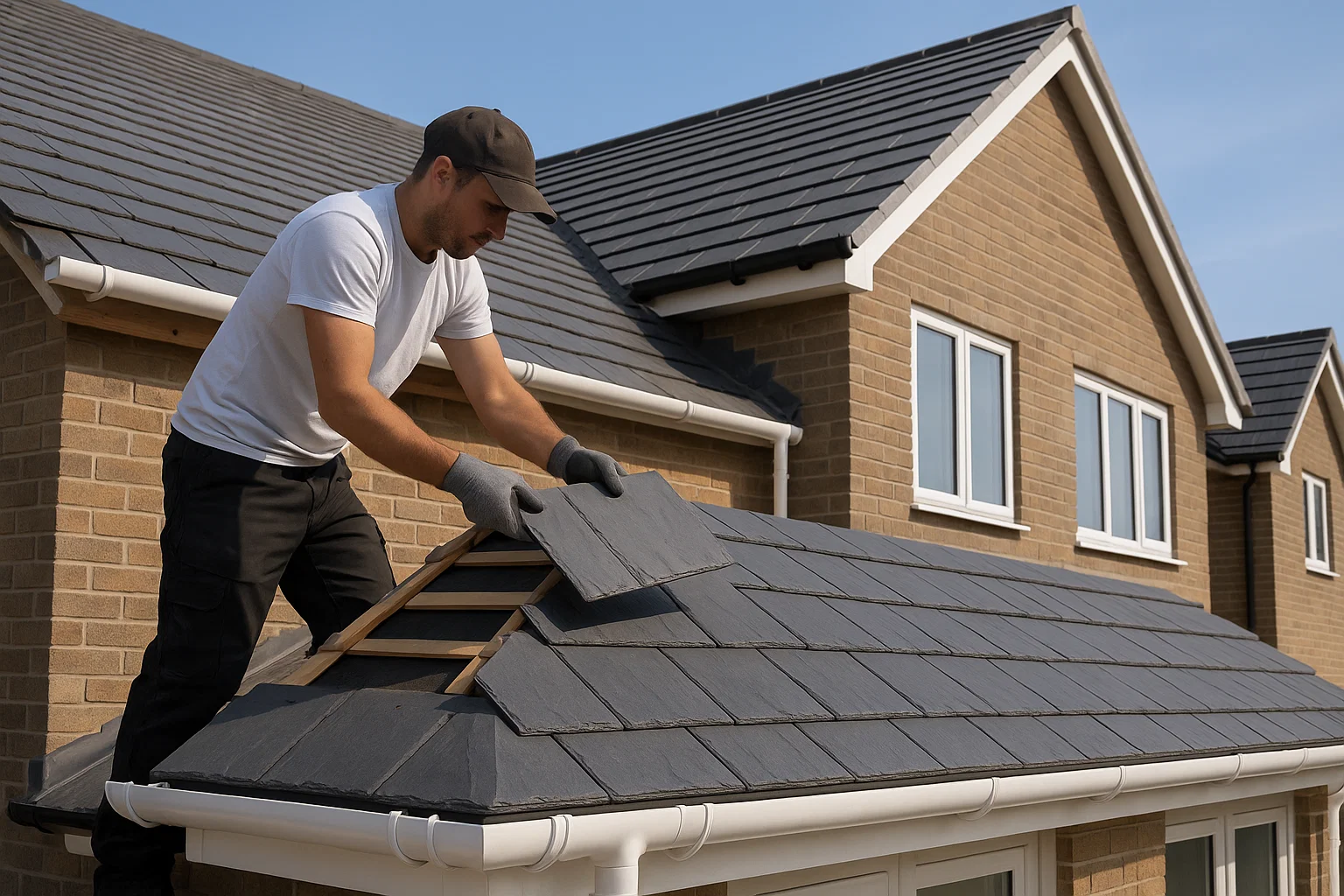
Synthetic Roofing Materials: Lightweight, Sustainable, and Smart
The newest trend in UK roofing is synthetic roofing materials, designed to replicate slate or clay while being lighter and easier to install. Made from recycled synthetic materials such as polymers and rubber, these tiles are ideal for homes where structural strength or budget limits rule out natural alternatives.
Composite tiles are energy-efficient, weather-resistant, and eco-friendly. Their lightweight nature speeds up the roof installation process, reducing labour costs and strain on your roof structure. Despite being newer to the market, these materials are proving reliable, often backed by warranties of 40 years or more.
For homeowners who want modern performance with a traditional look, synthetic and composite tiles offer the perfect middle ground, combining style, strength and sustainability.
Average new roof cost (2026): £60–£90 per m² installed.
Comparing the Best Roofing Materials for UK Homes
Each roofing material comes with its own balance of roof cost, style and lifespan. Clay and natural slate excel in durability and timeless design, while concrete tiles offer unbeatable affordability. Metal roofing leads in energy efficiency and modern aesthetics, and synthetic roofing materials bridge the gap for those seeking sustainability and value.
If you’re planning a roof replacement, consider both your home’s structure and your long-term goals. Heavier materials like slate and clay deliver unmatched longevity, while lightweight options such as metal and composite tiles offer flexibility and faster installation.
At Best Roofers Manchester, we help clients compare these roofing materials UK options based on cost, durability and design. Our experienced roofing contractors ensure your new roof is installed to the highest standards, whether you’re replacing a few tiles or upgrading your entire property.
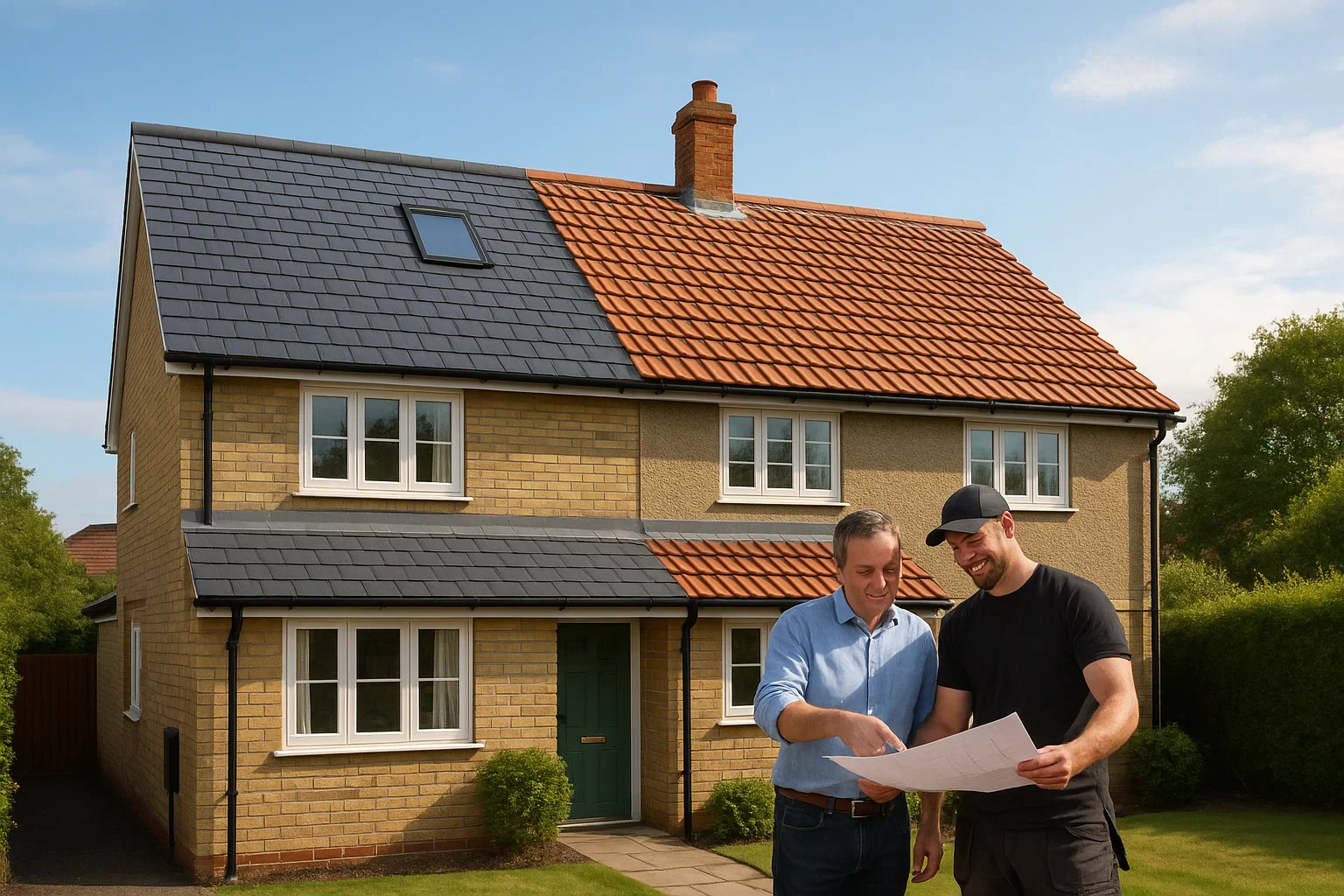
Making the Right Choice for Your Next Roofing Project
The best roofing materials don’t just suit your home’s style – they also meet your lifestyle, budget and maintenance expectations. A modern roof replacement isn’t just about aesthetics, it’s about creating a safe, efficient and long-lasting shelter for decades to come.
If you’re unsure which option fits best, talk to your local experts at Best Roofers Manchester. From heritage homes to modern builds and flat roofs, we’ll guide you through every stage, from material selection to installation and aftercare.
Your new roof is a long-term investment. With the right choice, you’ll enjoy lower maintenance costs, improved energy efficiency, and peace of mind knowing your property is protected whatever the weather.