Renowned for their durability, a professionally installed slate roof can last 100 years or more, but even the strongest roofing materials eventually reach the point where slate roof replacement becomes unavoidable. The true lifespan of a slate roof depends on the type of slate used and the quality of the original installation. Welsh slate, for example, is known to last well over a century, while some imported slates may struggle to perform beyond 80 years under UK weather conditions.
Cheap fixings, poor roof installation methods and years of exposure to wind, rain and frost can all shorten a roof’s lifespan. Add to this the fact that many UK homes still rely on original Victorian or Edwardian slate roofs, and it becomes clear why full replacement is now becoming more common than simple repairs.
This guide helps homeowners understand when a slate roof has reached the point where repairs are no longer enough. By the end, you’ll know which warning signs to look for and why acting early can prevent far more costly damage later on.
Common Signs a Slate Roof Needs Full Replacement
Many slate roof problems can be repaired, but even the best roofs reach a point where repairs are no longer the smartest option. Here are some signs that your slate roof may be nearing the point where replacement makes the most sense.
Frequent Slipping or Missing Slates
It is normal for a slate to slip now and again, especially following a storm with high winds, but frequent slate movement warns that all is not well. The obvious cause is failed fixings or brittleness around the nail holes. Once the fixing system starts to fail, continued repair work becomes costly and unsafe.
Worn or Failing Fixings or Nail Sickness
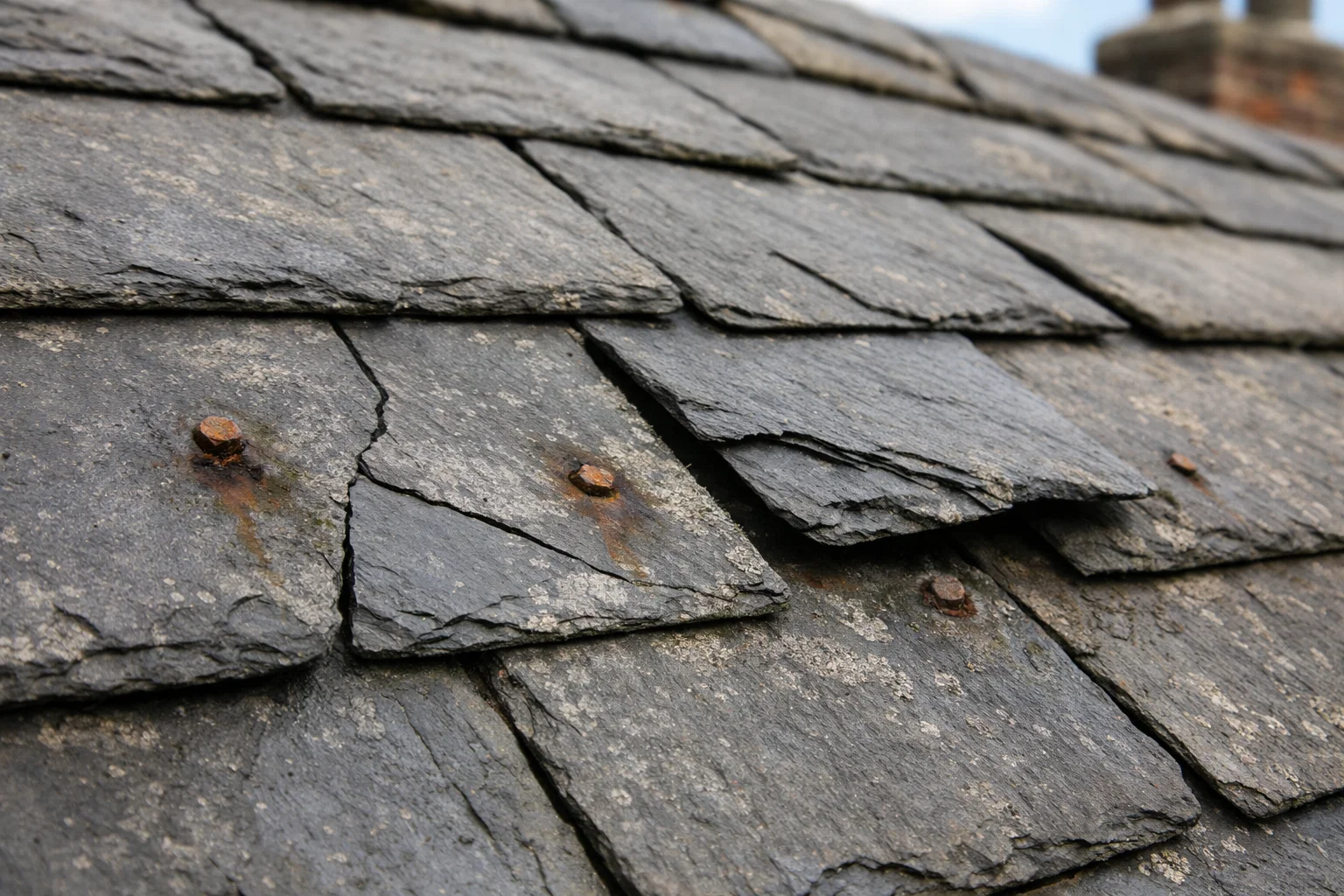
So-called nail sickness is a common cause of slate roof failure. It occurs when ageing iron or steel nails start to corrode. The corrosion causes the nails to break or pull through the slate. Without support, the slate tiles slide out of place.
Nail sickness usually affects large sections of the roof at once, and you can’t see it from the ground. Once the slate tiles start slipping, you usually have an advanced problem. At this stage, replacement is unavoidable.
Age-Related Brittleness or Crumbling Slate Roof Tiles
No material is immortal, and slate also has an end date. Slate slowly loses its natural oils and becomes brittle with the passing of time.
Signs that your slate tiles are reaching their end date:
- The slate cracks easily when handled
- The edges flake or delaminate
- The surface has a powdery residue or is crumbling.
At this stage, repairs become risky, and tiles start to break as you walk across the roof. Replacement tiles won’t match the existing slate tiles or hold well, as they will break away.
Persistent Leaks in Various Areas
One leak is usually repairable; many widespread leaks across the whole roof suggest a bigger problem. These could include:
- Underlay failure
- Widespread slate deterioration
- Failed flashing throughout the roof
If leaks keep appearing despite repairs, the roof system as a whole is no longer watertight.
Sagging or Uneven Roofline
Every slate roof should have a straight and even roofline. If it dips or sags along the ridge, has uneven slopes or bows between the rafters, there is a problem.
The roof battens or rafters may be failing, or the roof infrastructure may be sodden. Previous inlays may have increased the slate’s weight, putting pressure on the supporting beams. Structural issues indicate that repairs are no longer an option.
Deteriorated Ridge Tiles or Flashing
Ridges and flashings protect the most vulnerable parts of a roof. Common problems encountered include:
- Cracked or loose ridge tiles
- Perished mortar
- Corroded lead flashing
- Failed valleys
In many cases, specialist lead roof repair can address damaged flashing around chimneys, valleys, and roof junctions before water penetration becomes more severe.
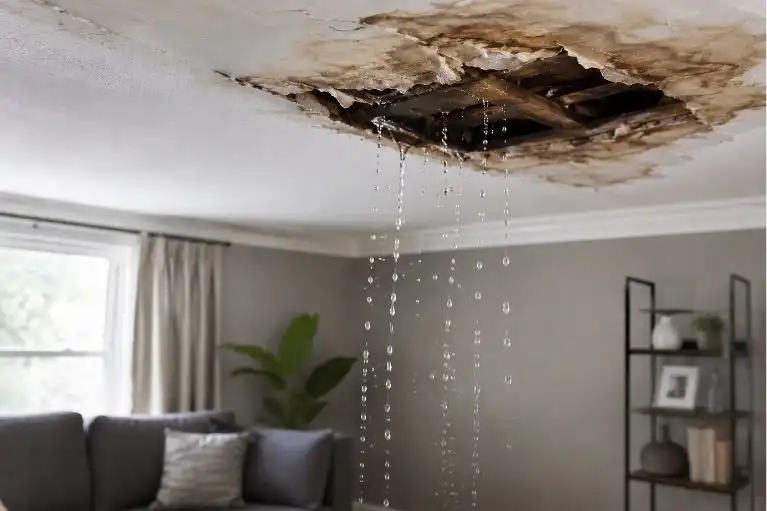
Water Stains on Ceilings or Loft Moisture
By the time water reaches internal spaces, damage is usually widespread. Look out for brown stains on the walls or ceilings, damp loft insulation, and the smells of mould or moisture.
Why Slate Roof Repairs May No Longer Be Enough
Repairs treat visible damage. Meanwhile, the base materials continue to break down, and new problems will keep cropping up elsewhere. The homeowner is likely to feel trapped in a constant cycle of repairs.
Your roof will reach a point where recurrent repairs cost more than re-roofing.
Signs that roof replacement is the better option
There are clear signs that a slate roof replacement is your only viable option.
- The roof is 70–100+ years old
- 20% to 30% of the slate tiles are defective
- Nail sickness is present
- The underlay is torn or perished
- The battens or rafters show signs of rot
- You have had the roof repaired on several occasions in recent years
A simple rule of thumb
If the roof’s structural components are failing, replacement is cheaper in the long run. Ongoing repairs will quickly add up and won’t fully restore weather protection, increasing the risk of interior damage. Repairs will not improve any insulation problems, affecting your home’s energy efficiency.
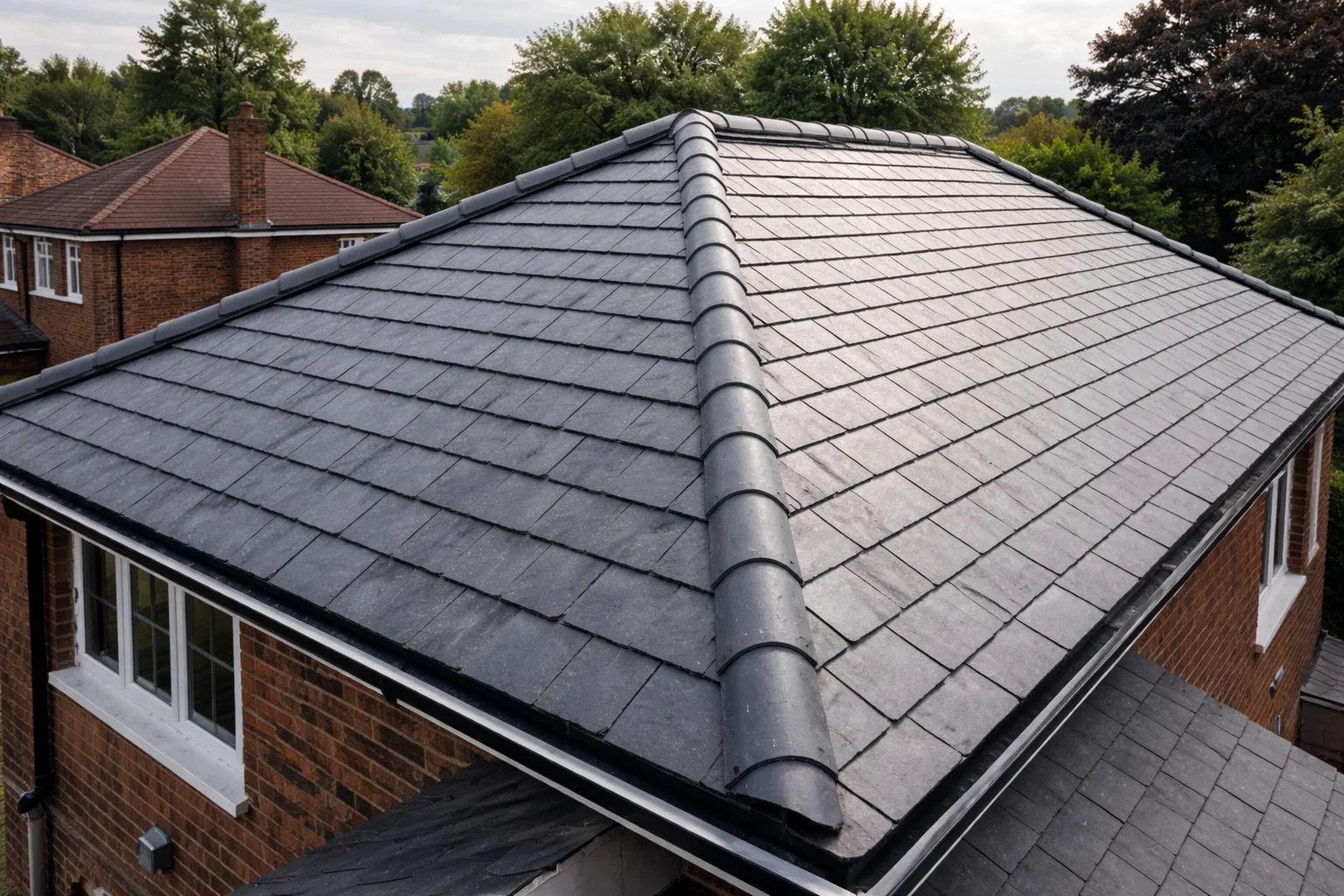
The Benefits of Replacing a Slate Roof Sooner Rather Than Later
Delaying slate roof replacement often leads to higher costs and more disruption.
Prevent Major Internal Damage
Water is very damaging, so you must repair leaks to prevent rotting timbers, wall and ceiling damage, electrical issues and insulation failure. If you let water seepage persist long enough, it may cost more to repair the underlying issues than the roof work itself.
Improve Energy Efficiency
Older slate roofs don’t have the breathable membranes used in modern roofs, so they are often drafty and allow heat loss. When you install a new roof, you’ll have a new underlay, better insulation and enhanced ventilation. Expect lower energy bills and a more comfortable home as a result.
Reduce Long-Term Expenses
A new slate roof will involve a large initial outlay, but you’ll put an end to the repeat call-outs, emergency repairs and the stress of not knowing when the next problem will pop up. You can expect a lifetime of service from a new slate roof. If you do the maths, you may find that a replacement costs less over 10 to 15 years than the continuous repairs did.
Enhance Property Value and Kerb Appeal
A new slate roof enhances your home’s appeal and reassures buyers that the roof will last for several decades. Your house will have more market appeal, increasing its market value.
Access to Better Materials
Modern slate options include:
- Stronger fixings
- Improved performance
- Better warranties
Slate Roof Replacement Options
You can choose a slate roof to match your preferences and budget.
| Type of Slate | Description | Pros | Cons |
| Natural slate | Quarried natural stone slate includes Welsh slate, Canadian slate, and Spanish slate | Extremely durable and can last over a centuryPrestige and beautyFire resistance | High initial costRequires skilled installationHeavy materials require structural roof strength. |
| Composite/ synthetic slate | These artificial slates are made from recycled materials. | Lighter than natural materialAvailable in a wider selection of coloursLess expensive than natural slateEasier installation | Shorter lifespan of 40 to 60 years |
| Slate Effect tiles | Concrete or fibre cement slate tiles | Less expensive than slate | Shorter lifespan of 40 – 50 years |
Types of Natural Slate
If you have decided to go with natural slate rather than man-made slate, you’ll have three types to choose from, including:
- Welsh Slate: Considered the best of the best, with a lifespan of 100 years or more. It costs more and is the ideal roofing solution for heritage properties.
- Spanish Slate: This popular slate balances cost with quality, with a lifespan of sixty to 100 years.
- Canadian slate has a similar lifespan to Welsh slate and costs much the same.
Slate Roof Costs
The overall cost of a slate roof will vary based on your location, roof pitch, access, and complexity. Here is what you can expect to pay per square metre of slate.
Cost of slate per m²
| Material | Costs per square metre |
| Natural slate | £160 – £210 per m² |
| Spanish slate | £95 – £125 per m² |
| Synthetic slate | £80 – £120 per m² |
| Slate-effect tiles | £40 – £80 per m² |
- Labour costs: Expect to pay £250 to £300 per roofer per day
Additional costs
Other factors and hidden costs include:
- Scaffolding
- Timber repairs
- Underlay and battens
- Skip hire and waste removal
- Lead flashing
Why Slate Roofing Projects Cost More
Slate is substantially more expensive than other materials, such as concrete tiles or clay tiles, but it is a long-term investment in your property. Slate looks great and will last up to 100 years. – it is an expensive roofing material, and installing slate tiles requires skilled workmanship and is labour-intensive.
Why a Roofing Inspection Is Essential
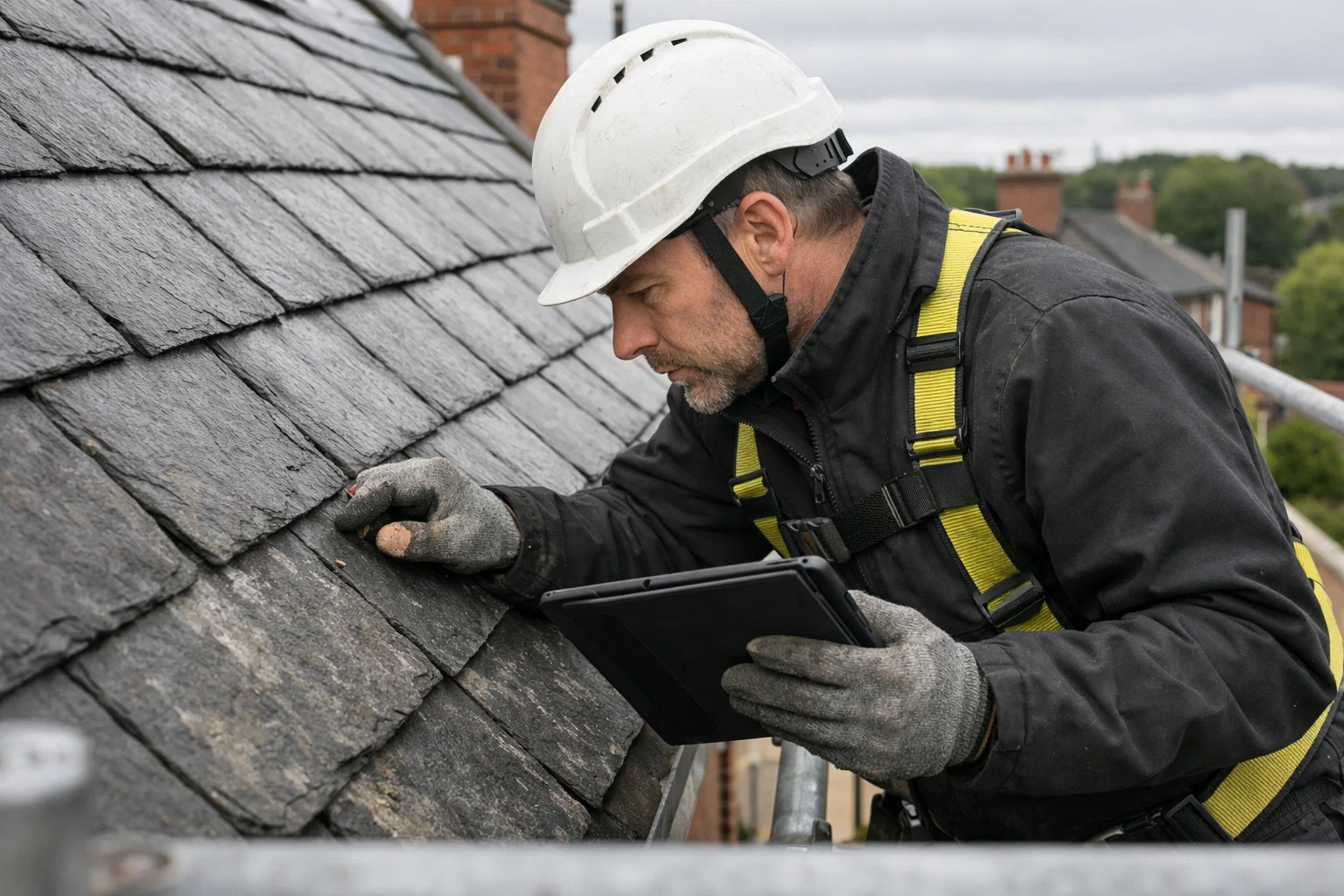
As with any roof, slate roof problems are usually not visible from the ground. You need a professional inspection to pick up the issues. A professional roofer with experience in slate roofs will know what to look for and can identify:
- Nail corrosion
- Hidden timber damage
- The condition of the underlay
- Batten failure
- Structural movement and decay
Homeowners often underestimate the extent of the problem without an inspection.
A professional inspection provides clear options and accurate pricing, along with expert advice on the best options.
Request a free slate roof inspection before committing to repairs.
Do You Need Slate Roof Replacement?
Here’s a quick checklist. Use it to gauge whether you need a new roof installation.
✔ There are many missing or slipping slate tiles
✔ The nails or fixings are rusted
✔ The roofline sags or is uneven
✔ The roof leaks in different rooms
✔ Slate surfaces are flaking or crumbling
✔ There seems to be no lasting solution to ongoing repair issues
If you tick two or more issues, replacement may be your most cost-effective option.
Arrange a Professional Inspection and Uncover What’s Really Happening on Your Slate Roof
Slate roofs are built to last. Slate is a durable material, but even slate has a defined lifespan.
If your roof shows signs of widespread wear, repeated failures, or structural issues, act now to protect your home and avoid the added cost of escalating damage. It’s time invest in a new roof.
A professional inspection is the best next step for you.
Contact Best Roofers today to arrange a slate roof survey and honest advice on whether repair or full slate roof replacement is the best option for your house.