A roof is a significant investment, so when considering a new roof, you want to ensure you choose the best roofing material for your home. You’ll expect that roof to protect your assets for years to come, and so you should. Do your research before you start this big and significant project.
A skilled roofer is just as important as the right materials, and your roofer should have the knowledge and experience to help you with this vital decision. Still, you’ve come to the right place to start your journey, as this guide compares the different materials and their pros and cons.
How Roofing Materials Compare
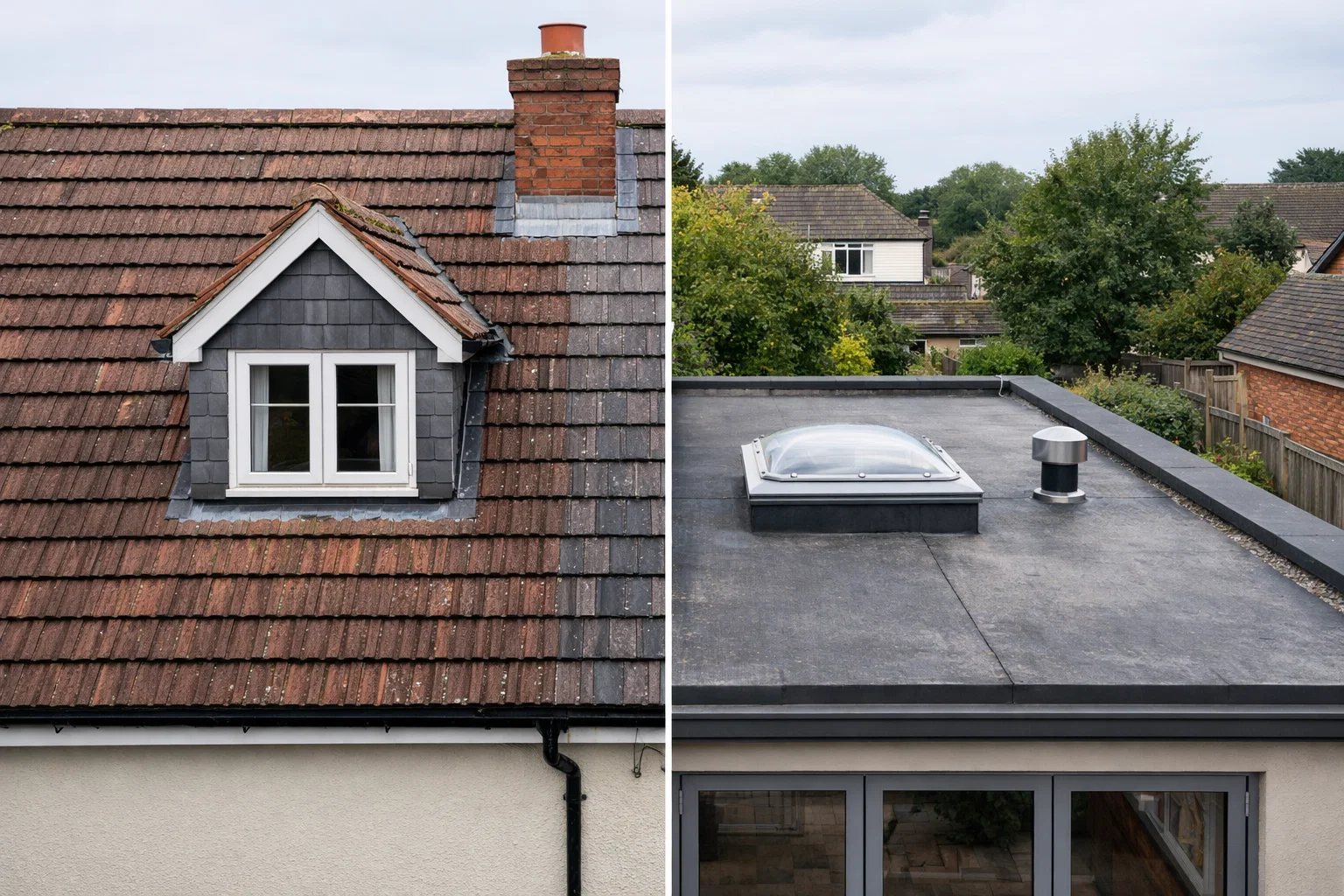
Roofs fall into two broad categories: pitched and flat. Pitched roofs use different materials from flat roofs, each with distinct benefits and downsides. Let’s compare them.
Slate Roofing
Slate is a premium roofing product, appreciated for its durability and timeless beauty. It is used on high-end homes and period properties. The material is expensive and must be regarded as a long-term investment. Installation is also more costly because it requires specialist skills.
Pros:
- An exceptional lifespan of 80 to 100 years or more
- Weather-resistant stone finish manages even the most extreme weather conditions
- Slate provides fire resistance
- Slate is visually appealing, improving property value
Cons:
- Expensive
- Slate is heavy, and it must have a structure to suit
- Repairs require specialist skills
Concrete or Clay Tiles
Tiles are among the most common roofing materials in the UK, offering reliable protection against salt damage and the heavy weather. Concrete tiles are more cost-effective than clay tiles, but clay tiles look more traditional and offer a wider range of colours and styles.
Pros:
- Tiles can last up to 70 years
- Choose from a wide selection of colours and styles
- Individual tiles are replaceable if broken.
Cons:
- With sufficient impact, tiles will break
- Tiles are heavy and must have support structures to manage the weight
- Tiles are not well-suited to low-pitched roofs.
If you’re weighing up slate against tile, our guide on slate vs tile roofing for UK homes breaks down the differences in more detail.
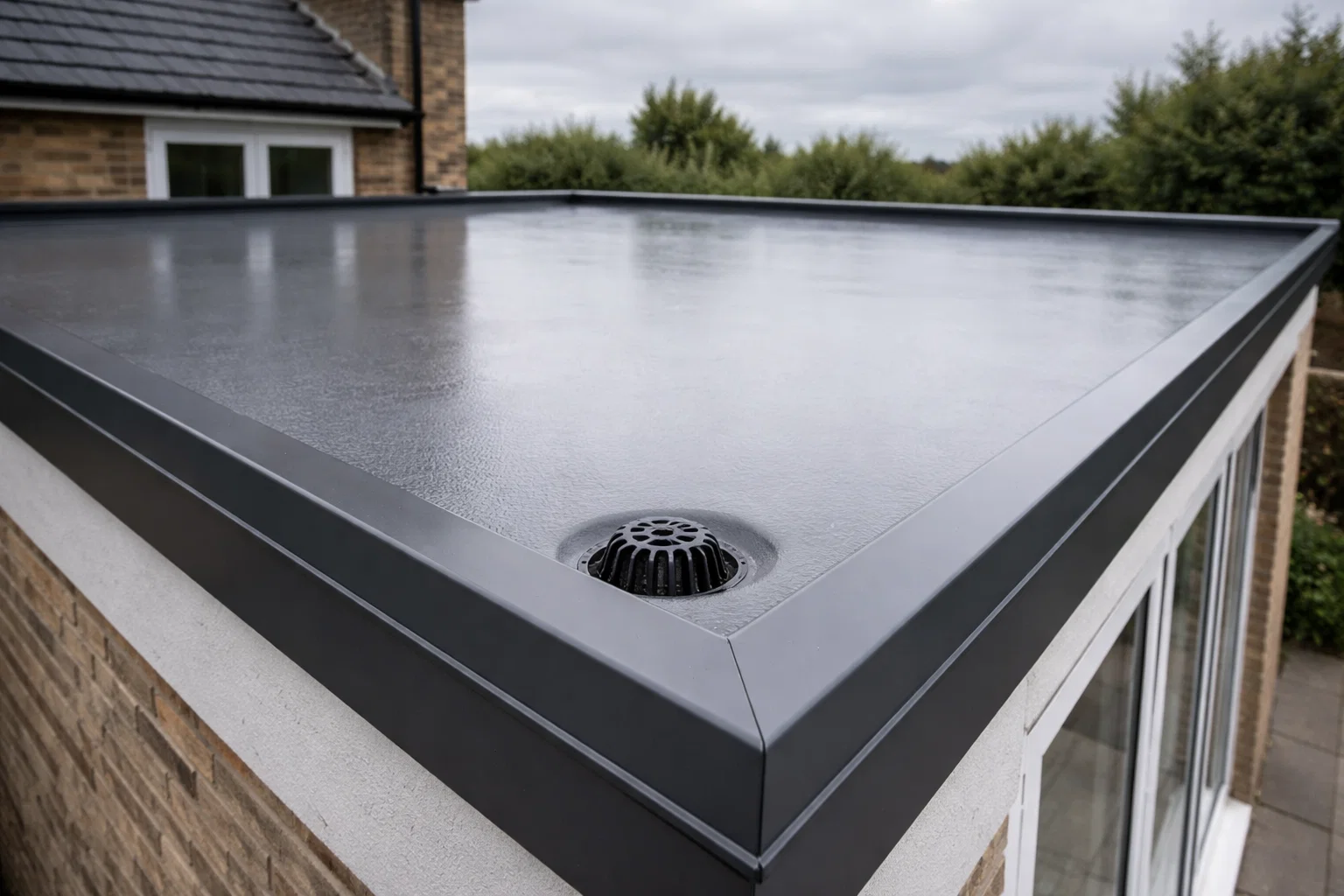
Flat Roof Materials
Flat roofs are most common in commercial buildings, but many homes also include sections of flat roof over garages and back extensions. They use different materials than pitched roofs and depend heavily on the materials and installation quality.
Felt Roofing
Felt roofing is one of the oldest and most economical options available on the market today. However, it has significant drawbacks, so it is best suited to budget-friendly projects or as a temporary solution.
Pros:
- Low upfront costs
- Quick and easy to install
- Works well on small areas.
Cons:
- Felt has a limited lifespan of 10 to 15 years
- UV damage can cause cracking
- Higher maintenance costs.
GRP Roofing
Glass Reinforced Plastic (GRP) roofing consists of fibreglass layers bonded with resin and other materials to form a seamless, waterproof surface. GRP works well on domestic flat roofs.
Pros:
- GRP should last at least 25 years and can last for as long as four decades
- The seamless finish reduces the leak risk
- GRP requires minimal maintenance.
Cons:
- GRP is more expensive than felt
- Installation is more difficult and precise
- Roof movement causes cracks.
Protective Coatings
Liquid roofing systems form a waterproof membrane when applied to the roof surface. Liquid systems perform well on commercial roofs and in refurbishments, where the membrane provides an additional layer of protection for the roof structure against leaks.
Pros:
- Liquid systems work well on complex roofs with detailed shapes and patterns.
- The liquid creates a bonded, seamless surface that won’t leak
- Use liquid systems for refurbishing a problematic roof.
Cons:
- Variable quality depending on the product used
- Requires skilled application
Metal Roofing
Metal roofing is gaining popularity, particularly for commercial builds. It works best on modern homes and commercial buildings.
Pros:
- Metal sheets are a lightweight, durable material
- The best roofing sheets, like coated steel, will last for several decades
- Corrosion resistance means that the metal needs little maintenance
- It has a modern appeal.
Cons:
- The initial outlay is higher
- Without insulation, metal can be noisy, especially in heavy rain
- Requires specialist installation.
Best Roofing Material Comparison in a Nutshell
| Material | Roof type | Lifespan (years) | Main pros | Main cons |
| Slate | Pitched | 80 – 100 | Longevity, good looks | Expensive, heavy |
| Tiles | Pitched | 40 – 70 | Availability, versatility | Heavy, can crack |
| Felt | Flat | 10 – 15 | Inexpensive, fast installation | Short lifespan |
| GRP | Flat | 25 – 40 | No seams, low maintenance | More expensive than felt |
| Liquid Roofing Systems | Flat | 20 – 30 | No seams, Good for repairs | Skilled application |
| Metal | Pitched and flat | 40 – 70 | Light, modern, durable | Noise risk, high cost |
How Climate Affects Roofing Choice
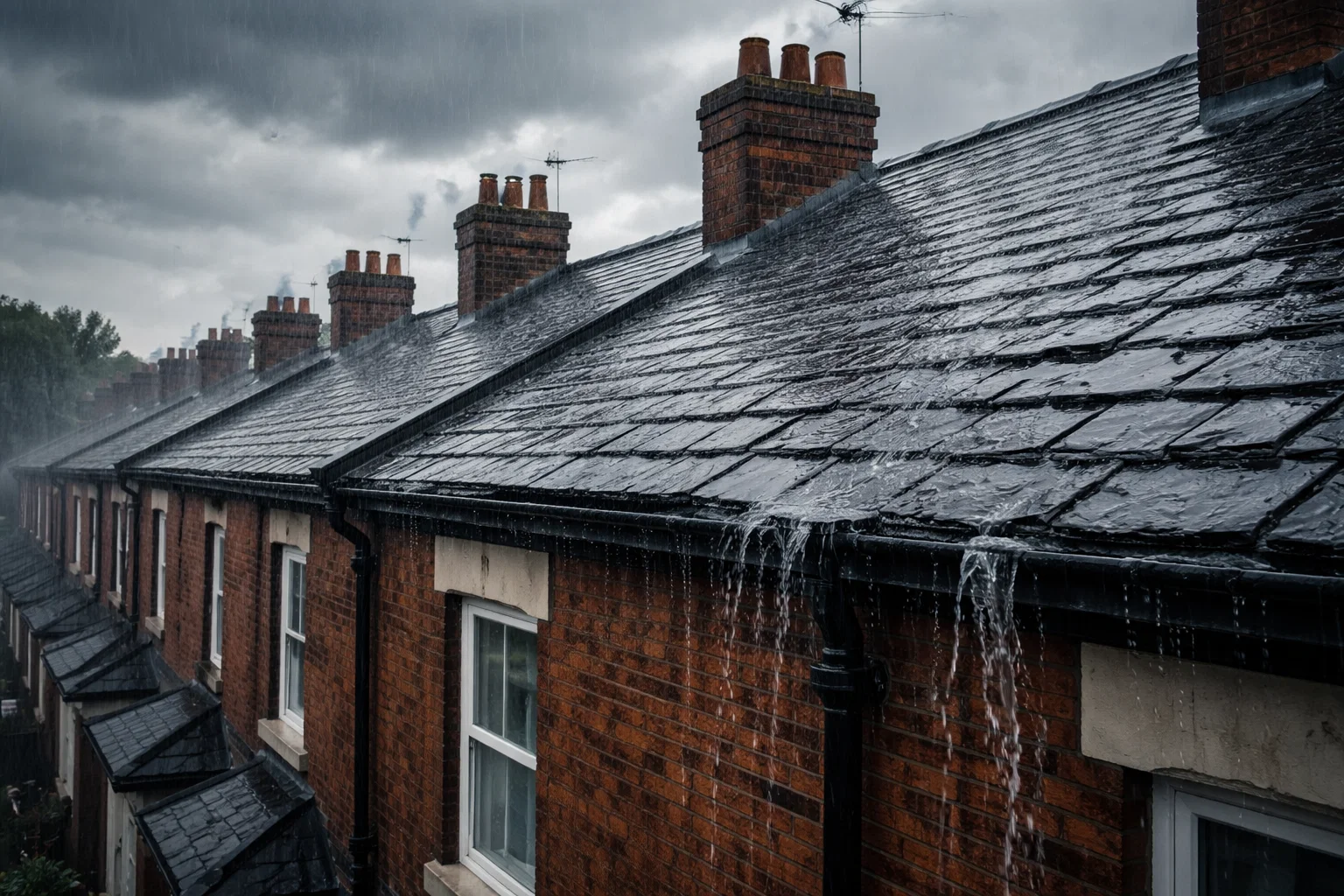
Climate is a major determinant in how well a roof performs over time. Manchester’s weather is variable, with frequent rain, strong winds, and temperature changes, all of which can affect the roof’s condition. Your choice of roofing material is therefore as important as proper installation.
Let’s examine the effects of Manchester’s harsh weather conditions on the roof surface.
Rainfall
Manchester experiences consistent rainfall, so roofs are exposed to moisture for most of the year. The city also experiences heavy rain. Materials that perform best in wet conditions are those that:
- Shed water quickly
- Have fewer joints or weak points
- Resist long-term moisture absorption
Slate and concrete or clay tiles work well on pitched roofs thanks to their overlapping design, which promotes efficient water runoff. GRP and liquid systems are better suited to flat roofs than traditional felt. These materials form a seamless waterproof layer, reducing the risk of leaks.
Poor drainage or low-quality materials can lead to ponding water, leaks, and early failure, especially on flat roofs. Ensure installation by trained professionals to avoid roofing problems.
Wind Exposure
Although not the windiest city in the UK, Manchester is still known for its strong, frequent winds. Wind is, therefore, a significant factor to consider, particularly in exposed areas or on taller buildings.
Wind can lift tiles, loosen fixings, and exploit minor weaknesses. Heavier materials, such as slate and concrete tiles, perform well in high winds when properly installed. Metal roofing also performs well in windy conditions when properly designed and professionally installed with corrosion-resistant fasteners.
Lightweight options, like felt and asphalt-based products, are vulnerable when installation standards are poor.
In areas prone to high winds:
- Secure fixings matter more than material alone
- The roof must have robust edge detailing and ridge systems
- Professional installation is vital.
Temperature Swings
Although UK temperatures are not extreme, repeated freeze-thaw cycles will gradually wear down roofing materials. When cracks appear, water enters and will expand when frozen, weakening the roofing material. Tiles and slate are durable, but because they are rigid, they can crack when water penetrates.
Flexible GRP and liquid membranes handle thermal movement well, making them well-suited for flat roofs.
Lower-quality felt systems become brittle over time and are prone to splitting and leaking.
Cost Comparison: Short-Term vs Long-Term Value
When comparing reroofing costs, it is essential to recognise that the initial investment does not tell the whole story of the roof’s lifetime costs. Very often, the cheapest installation cost is the most expensive roof to maintain and repair over its lifetime. It probably won’t last as long, so you’ll need to factor in the replacement cost.
Short-Term Costs
Short-term costs include material purchases and roof installation. Felt roofing and asphalt shingles are generally the cheapest materials. They are quicker to install and need less specialist labour. These roofing systems are, therefore, the obvious choice when the budget is tight.
Expect higher upfront costs for mid-range options like concrete tiles, GRP, and liquid roofing systems, but they are more durable. Slate and metal roofs are the most expensive to install because the materials are costly, installation requires skilled labour, and fitting times are longer.
Long-Term Costs
Long-term costs happen over the lifespan of the roof and include:
- Repairs
- Regular maintenance
- Early replacement
A felt flat roof, though initially less costly, may require replacement in 10 to 15 years. Therefore, the cost over 30 years could be higher than a GRP or metal roofing system.
Slate and metal roofs often deliver the best lifetime value, as they should last several decades with little maintenance or repairs. Tile roofs also perform well over the long term if you replace damaged tiles as they occur.
You can also compare costs, durability and appearance in our guide to the top roofing materials for UK homes in 2026.
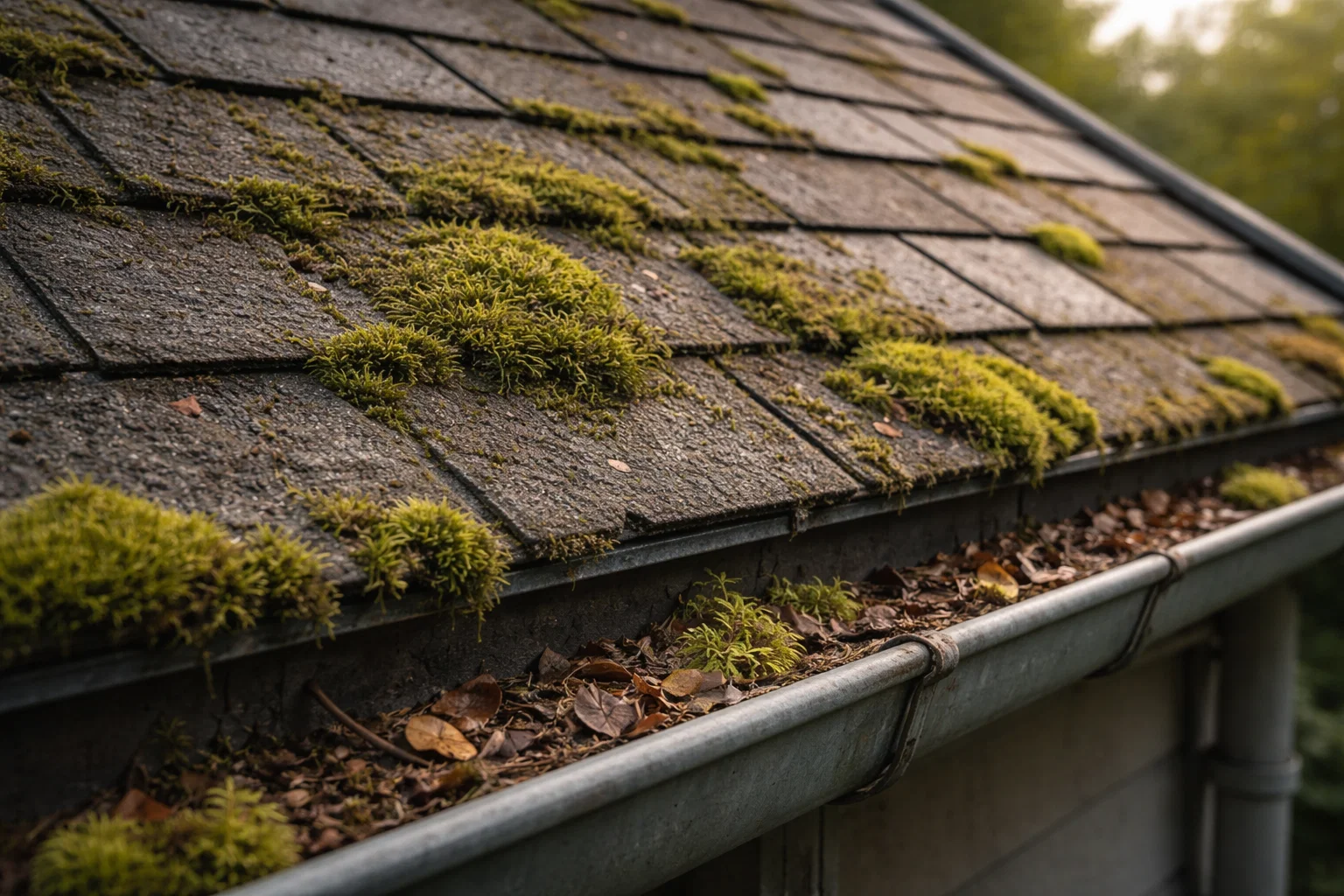
Maintenance Requirements: What to Expect
Maintenance needs vary widely depending on the materials used, the quality of installation, and environmental factors.
Low-Maintenance Roofing Options
Some roofing materials require little maintenance. These include:
- Slate roofing: Requires occasional inspections and little to no proper maintenance
- Metal roofing: Corrugated sheets, like coated steel and aluminium sheets, resist moss and rot, and they won’t crack
- GRP and liquid systems: Seamless finishes reduce leak risk
These systems typically require little more than visual checks and cleaning leaves and other debris from the gutters.
Roofing Materials That Need More Maintenance
Other options need more regular attention to stay watertight:
- Felt roofs: Tend to crack, blister, and succumb to UV damage
- Asphalt shingles: Suffer from granule loss and wind damage with time
- Tile roofs: Tiles may crack or slip
Regular inspections and minor repairs are essential to prevent minor issues from escalating into more costly problems.
Quick Comparison: Cost vs Maintenance
| Material | Initial Cost | Long-term Value | Maintenance Required |
| Felt | Low | Low | High |
| Concrete tile | Medium | High | Medium |
| Clay tile | Medium/high | High | Low/Medium |
| GRP | Medium/high | High | Low |
| Liquid systems | Medium | Medium/high | Low |
| Metal roofing sheets | High | Very high | Very low |
| Slate | High | Very high | Very low |
Aesthetic Appeal and Property Type
Your roofing material must support the building’s architectural style, or the building will lose kerb appeal and possibly even value.
Heritage Homes
Older and period homes should use roofing materials that match the home’s traditional style. Natural slate and clay tiles complement this aesthetic and are often required in conservation areas. Slate and clay have a classic look. They age well, developing more character with time.
Modern Builds
Metal roofing, slate, and top-quality tiles complement the clean lines and modern appearance favoured by architects. GRP and liquid systems are popular options for modern flat roofs.
Extensions
Extensions must balance cost with aesthetics while blending with the main house’s style.
If the extension has a flat roof, you can use GRP or liquid roofing, while it is best to match the existing tile or slate on a pitched extension.
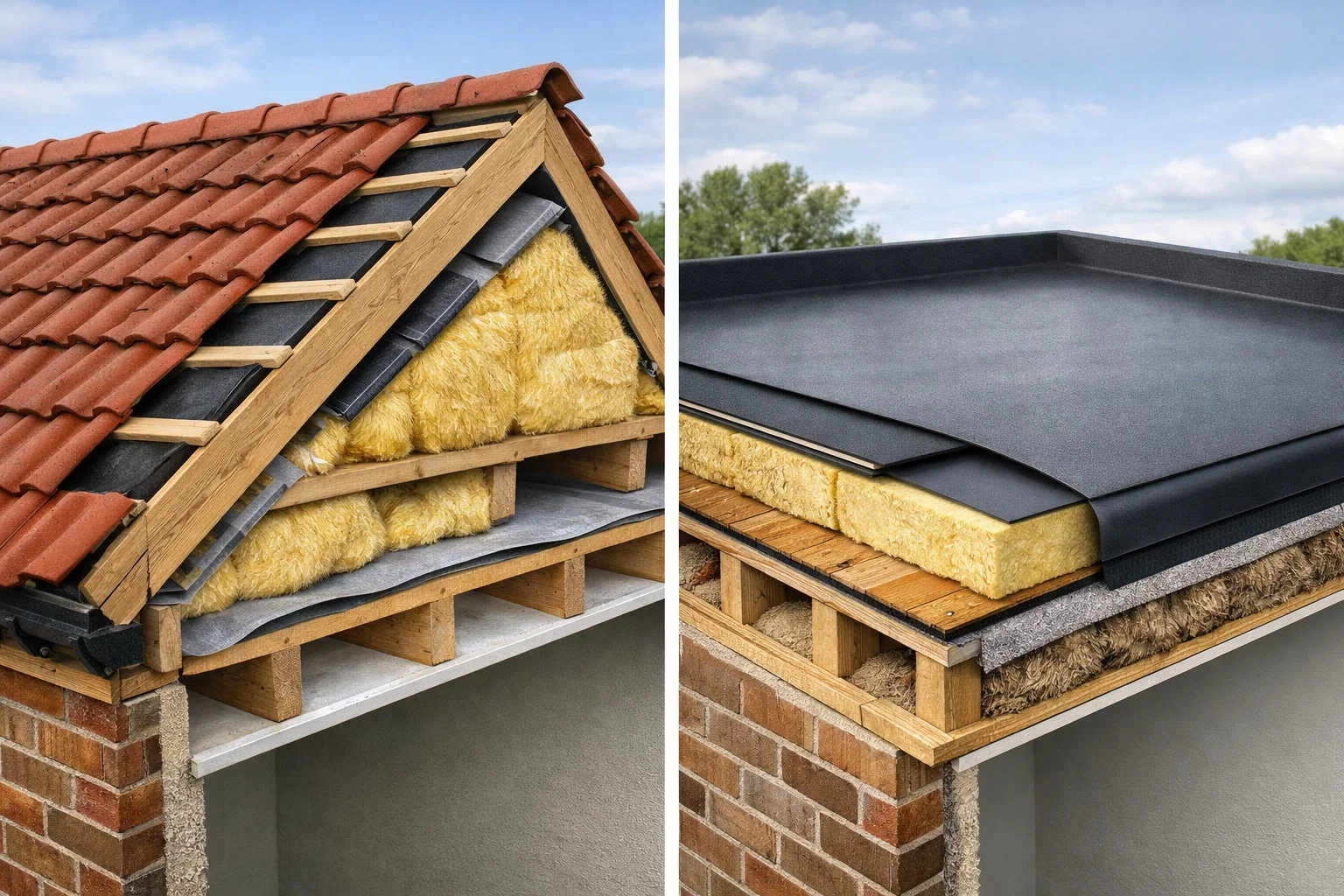
Energy Efficiency and Insulation Properties
Roofing insulation indeed does most of the work in preventing thermal transfer through the roof. However, roofing materials play a supporting role, with some materials performing better than others.
The Warmest Roofs
Heavier materials, such as slate and tile, provide good thermal mass, helping regulate indoor temperatures and reduce energy costs. These materials support efficient insulation, providing stable indoor conditions.
Flat roofing systems such as GRP and liquid membranes rely heavily on the insulation installed beneath them. Still, a well-designed flat roof system can be just as energy-efficient as a pitched roof.
The design and installation of roofing systems are vital to achieving the most energy-efficient results. No matter how thermally efficient the materials, poorly installed they will allow heat to escape, creating uncomfortable indoor conditions.
Environmental Impact
Increasingly, developers and homeowners are demanding sustainability as an essential aspect of the building.
Eco-Friendly Roofing Materials
Roofing materials of natural origin with a longer lifespan have a lower environmental impact. Some are also recyclable. The more sustainable options include:
- Clay tiles: Durable product made from natural products
- Slate: Long-lasting and natural, slate requires little processing
- Long-lasting and fully recyclable.
Short-lived materials like felt have a higher environmental impact because they are replaced more frequently.
Green Roof Options
Green roofs have become more popular in recent years, particularly on commercial and apartment buildings. They work well on flat roofs and on some low-pitch structures that can support them. These roofs consist of a layer of live vegetation over a waterproof roofing system and therefore require maintenance.
Green roofs improve insulation, reduce water run-off and enhance sit quality. The roof membrane on a green roof system is likely to last longer than many other roofing systems.
Find the Best Roofing Material for Your Roofing Project
Your roof is a long-term investment, and a very important one, since a poorly installed roof will quickly start racking up costs. Water will find the weakest point on your roof and slowly seep into the infrastructure below, and when it does, the rot will set in. Seepage causes a raft of hidden costs that could cost you a great deal of money.
Save money over the long term by evaluating your long-term needs and choosing the best material for the job. Then ensure it is correctly installed by partnering with a reliable roofing company that understands the Manchester environment.