Felt roofing systems offer the most economical roof coverings on the market today. It is easy to see why they are so widely used, as the material costs up to 60% less than single-membrane systems. Felt roofing systems consist of several layers of roofing felt saturated with hot bitumen, creating a robust barrier that protects the roof from rain and snow. Felt roofing materials come in a range of colours and styles, so you can choose one that suits the building’s design.
On the downside, the installation process is more labour-intensive than the alternatives, which will offset some of the material cost savings. There are several types of felt flat roof systems, with quality and longevity varying considerably; some of the cheaper felts last no more than 10 to 15 years.
In this article, we’ll examine your flat roof options, including prices and expected lifespans, to help you decide on the best options for your roof.
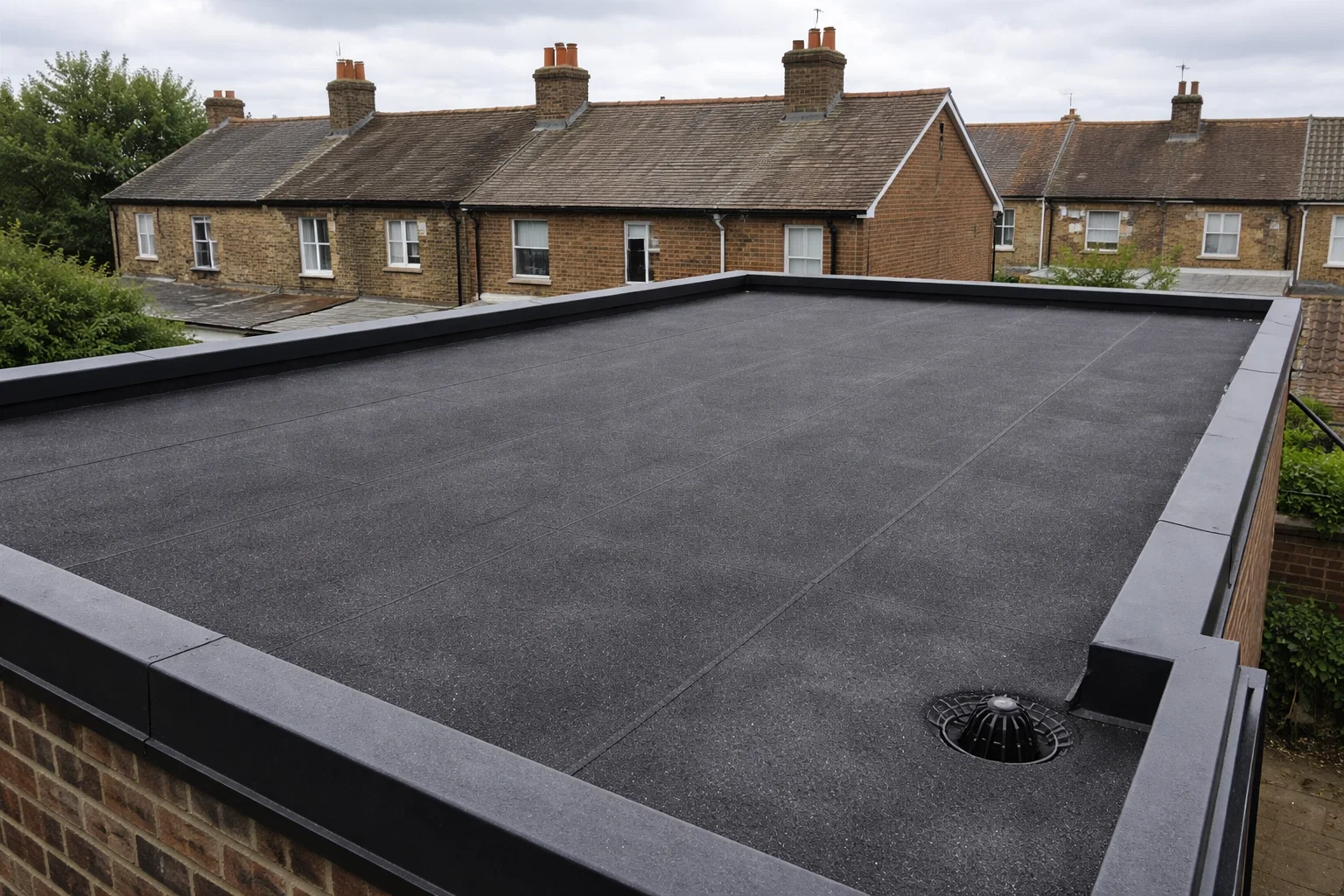
How Long Do Felt Flat Roofs Last in the UK?
A felt roof in the UK should last between 10 and 15 years, though a professionally installed, high-quality system can last for as long as 30 years with regular inspections and proper maintenance.
Factors that reduce the lifespan
Your roof’s longevity is dependent on several factors, all of which combine to determine how durable and reliable the end product is.
The material used
Roofing materials play a crucial role in a roof’s durability and longevity. Modern felt systems, like torch-on felt and those containing polyester or PVC, last much longer than the older tar-based alternatives. Triple-layer systems are more robust than double- or single-ply flat roof systems.
Felt roof installation
Poor installation will lead to roof failures. Problems such as poorly sealed joints, trapped moisture, and insufficient pitch can cause puddling and damage to infrastructure. Always choose a roofing contractor with experience installing felt roofs for peace of mind.
Repairs and maintenance
It is impossible to see what is happening on the roof surface without regular inspections. Twice-yearly inspections enable early problem diagnosis. Ensure blocked drains are cleared during the inspection to ensure proper drainage and prevent water accumulation that could damage the roof surface. If the inspector finds small cracks, bubbles or organic growth, order repairs as soon as possible to prevent further damage.
Environmental factors
The roofing felt must be strong enough to withstand the onslaught of the elements without major deterioration. Unless the materials are up to the task, you will experience the following issues:
- Temperature changes cause roof materials to expand or contract, which, over time, can lead to cracks and blistering.
- Wind, rain, and freeze-thaw cycles take their toll, lifting the edges and causing damage.
- The sun’s heat can dry out bitumen, making the roof covering brittle.
Modern technology produces remarkably resilient materials.
Signs It’s Time to Replace Your Felt Roof
Felt roofs wear out gradually, offering clear visual and performance signals that it is time to replace your roof.
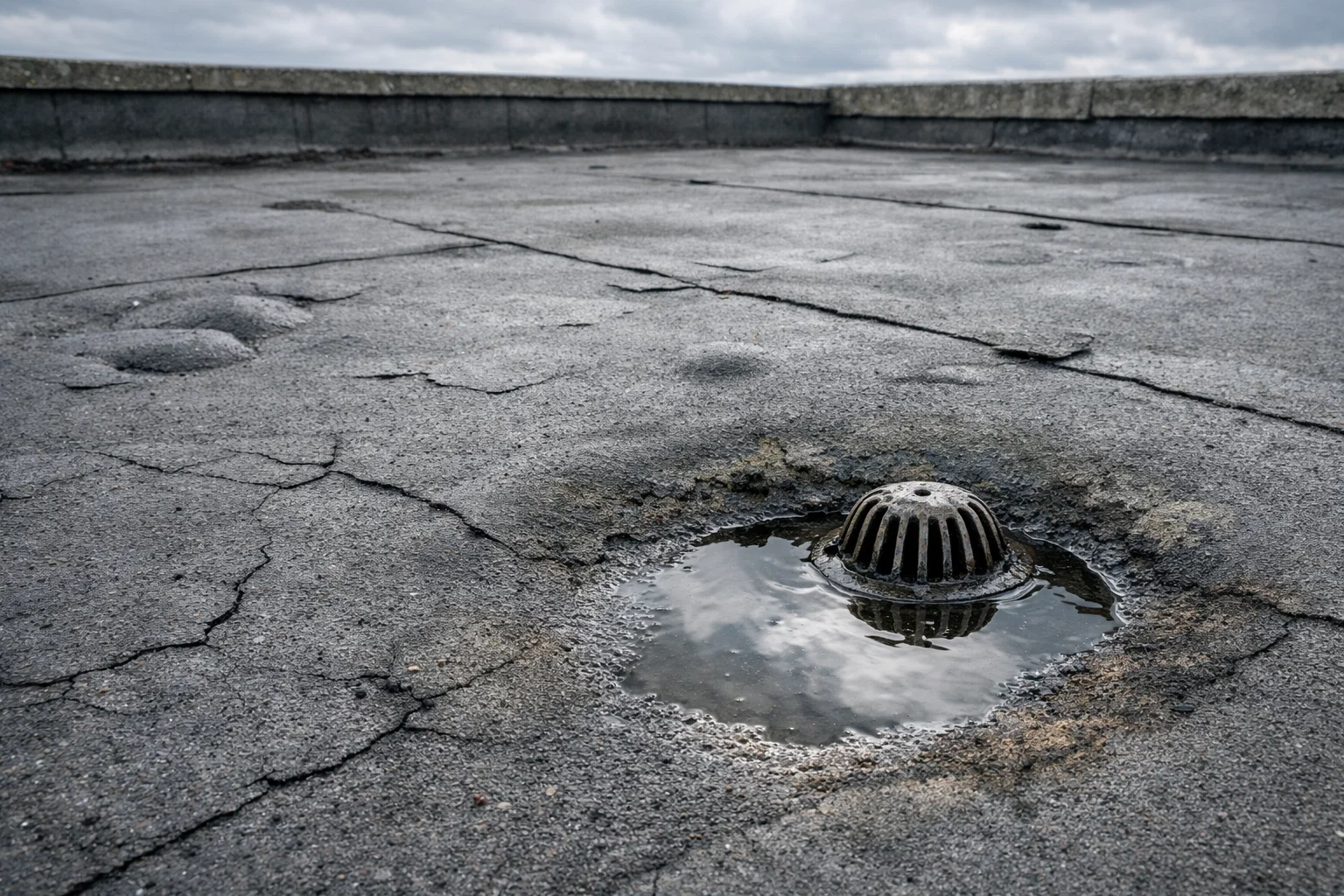
Water Puddles
Water should drain off the roof toward the water outlets. If water starts to puddle on the roof surface, you have a problem. Water that remains on the surface will weaken and rot the felt surface beneath.
Blistering and Bubbling
Bubbles and blisters on the felt surface indicate that moisture lies trapped between the layers of roofing material. If left unchecked, the trapped moisture will cause cracks and leaks.
Cracks, Splits and Tears
Cracks, splits and tears are common problems that will allow water to seep into the roof structure, and unless quickly dealt with, the material breaches could cause structural damage. Splitting often starts where the felt meets upstands around roof lights or at the edges of the roof. Typically, UV degrBest Roofers tion and thermal movement cause the cracks.
Leaks at the Edges or Around the Seams
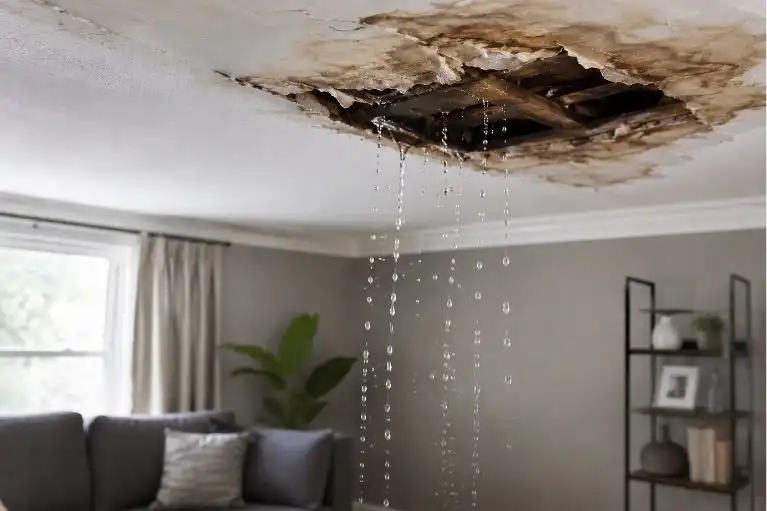
The edges and seams are the weak points on any felt flat roofing system. It is here that water can enter and create problems. If you see water stains on your ceiling or damp patches on your walls, your roof is likely no longer waterproof.
Crumbling Flashing
The flashing forms a barrier where different surfaces meet. The aim is to ensure a watertight seal on the roof surface, free of leaks. Flashing around chimneys, roof vents, and walls often wears out before the felt. Water can bypass the membrane when the flashing deteriorates and can no longer prevent leaks.
Repairs vs Full Replacement
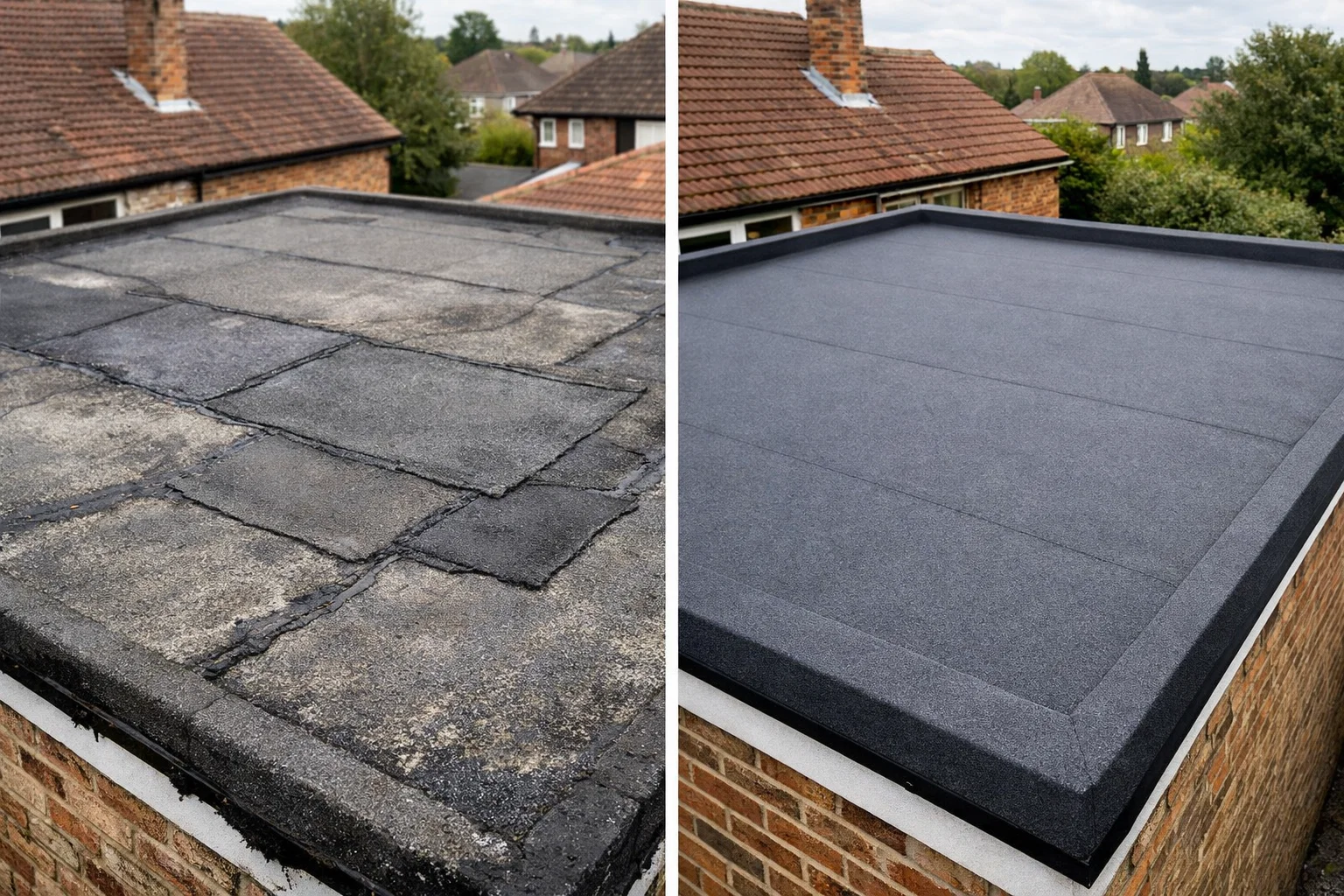
Now that you know how to spot common issues with your felt roof, what should you do? Should you repair or replace the roof?
When You Can Get Away With Repairs
Repairs make sense when:
- The damage is limited in scale
- The felt is less than ten years old.
- You want to extend the roof’s life for a few years as you plan to sell the property.
You can buy time and delay re-roofing by resealing the edges, patching blisters or putting a liquid waterproofing coat as a final layer over the felt surface. Properly applied, these protective coatings can add several years to the service life of your flat roof felt.
When replacement is the better option
A replacement is usually wiser when:
- The felt has passed its 15th anniversary
- The signs of failure are widespread
- It is becoming costly to complete the ever-more frequent repairs
- The roof has started to leak into your living or working spaces.
You can often save money in the long term by replacing the worn felt with a modern roofing membrane. The new roof will reduce repair frequency and offer a longer service life than the older membrane. Older felt is usually made from organic tar-saturated fibres, while modern felts use a more durable polyester or fibreglass base, which is soaked and coated with bitumen.
If you’re unsure whether patching the felt is worthwhile or a full replacement makes more sense, our guide on roof replacement vs repair explains how to make the right call based on cost, condition and long-term value.
Flat Roofing Felt Alternatives
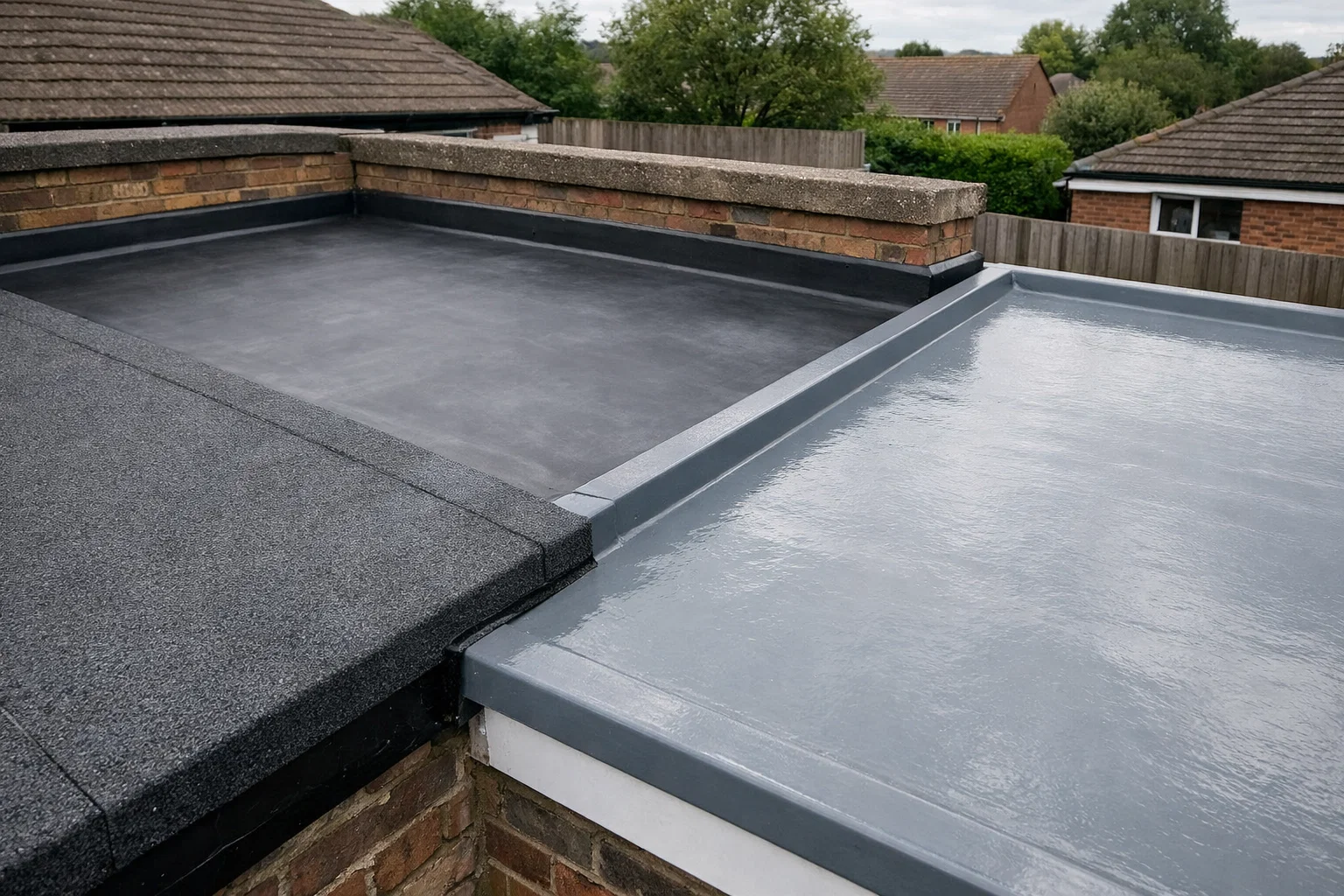
Many UK buildings rely on felt for flat-roof waterproofing because it is inexpensive and familiar. Yet there are better, more durable alternatives that are worth considering for your project. There are several different types of flat roof materials you can choose from.
EPDM Rubber Roofing
EPDM, a single-layer rubber roofing system, is a flexible material with fewer seams. These self-adhesive systems offer excellent UV resistance and require little maintenance. The seamless rubber ensures flexibility that will endure through hot summers and winter freeze-thaw cycles. This long-term roof replacement should last for 20 to 25 years after installation, but it is a little more expensive to install than felt.
GRP Fibreglass Roofing
GRP fibreglass roofing is a seamless, premium product with a hard, watertight finish. The liquid-applied system provides a tough surface that works well on terraces, balconies, and walk-on roofs, but it is expensive and must be installed by workers trained in GRP installation. A GRP roof is flexible so that it won’t crack. It resists thermal movement and is UV-resistant, offering excellent protection and ensuring a finish that should last 25 to 30 years.
Liquid Roofing Systems
Liquid acrylic and polyurethane membranes work well with irregularly shaped roofs and for refurbishments. They cure into a seamless coat. These systems offer property owners a cost-effective way to refurbish a roof by covering the substrate. They can eliminate the need for a replacement roof at lower material and labour costs, extending the roof’s service life by 10-15 years without disrupting building occupants.
Modified Bitumen Systems
Modified bitumen uses advanced polymers to create a roof that offers the longest-lasting flat roof. These systems can last up to 40 years when professionally installed and properly maintained.
These roofing systems consist of several layers that work together to create a tough surface that resists weathering and thermal stress. These systems are flexible and crack-resistant. Heat-welded bonds the membranes, eliminating the failure points at the seams seen in other roofing systems.
PVC Single Layer Membranes
These durable synthetic sheets are very popular for waterproofing flat roofs in the UK. They are UV-resistant, energy-efficient, and won’t crack or shrink. PVC membranes can last for up to three decades when properly maintained. These roofs work well on green roofs. Installation is complex and requires hot-air welding by a trained roofer.
Bauder Roofing vs Garland Roofing: Which Performs Best for Flat Roofs? If you’re considering upgrading from felt to a longer-lasting system, our comparison of Bauder roofing vs Garland roofing looks at how leading flat roof membranes perform in real-world UK conditions.
5. Cost Examples (UK Data)
Understanding costs helps homeowners budget wisely.
Felt Roofing Costs (Installed)
Roof felt rolls cost an average of £50 per square metre. Torch-on felt is significantly more expensive at an average of £65. The price you pay is dependent on the type of material and the roof’s complexity.
Comparison of felt materials for flat roofs
| Roofing Material | Cost per m² |
| Regular felt | £50 – £70 |
| Torch-on felt | £60 – £80 |
| Upgraded felt systems | £80 – £120 |
Do your research and obtain several quotes to compare costs from reputable roofing companies. Labour costs average £200 per day. This cost can range from £250 to £350 per day, depending on your location.
Installed cost comparisons of various flat roof materials
| Material | Typical UK Cost per square metre | Expected Lifespan |
| Felt Materials | £250 – £450 per m² | 10 to 15 years |
| EPDM Rubber | £50 – £90 per m² | 40 to 50 years |
| GRP Fibreglass | £80 – £130 per m² | 25 to 40 years |
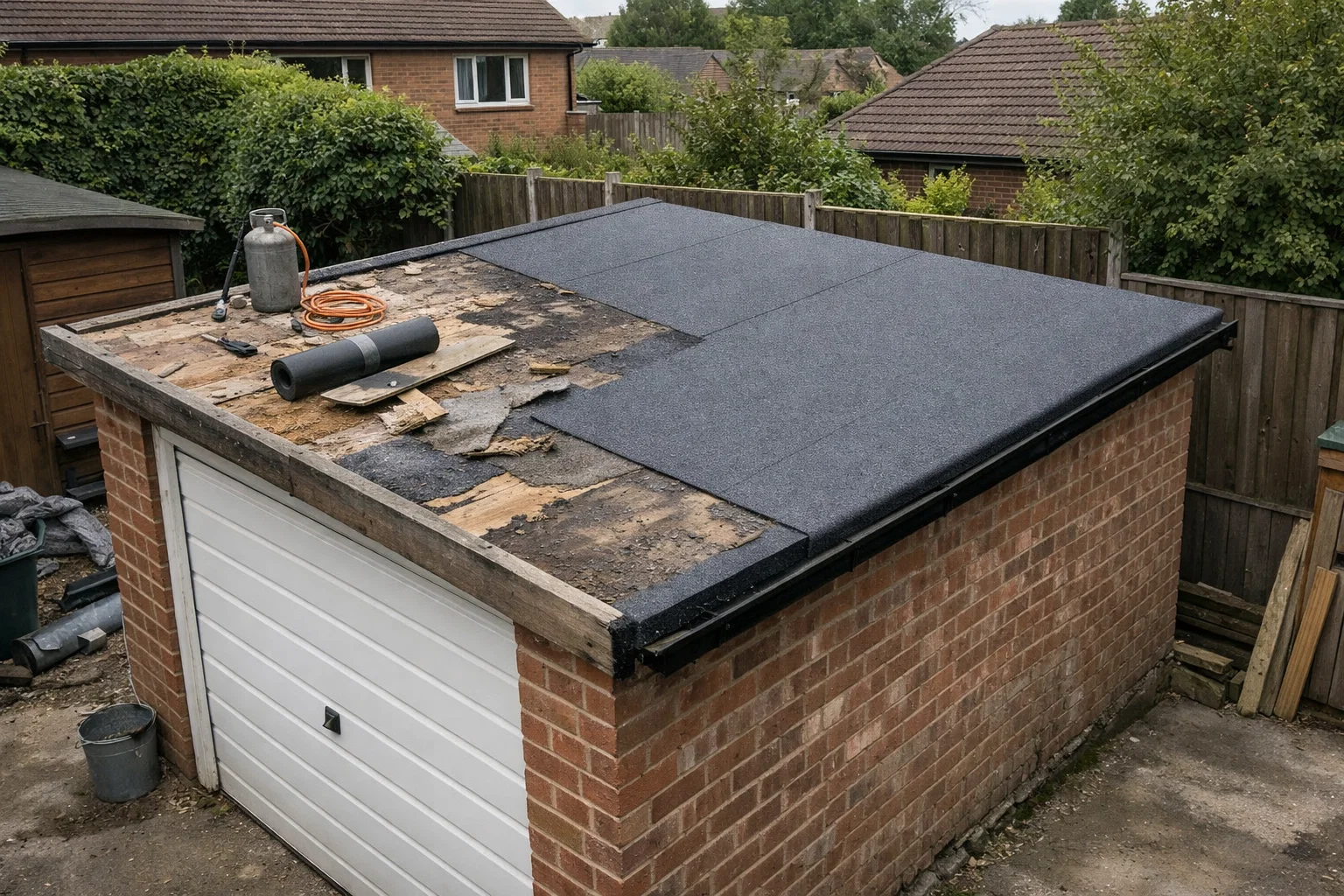
For example, replacing the felt on an average garage or shed roof will cost about £ 1,500.
Modern Felt Technology
Although felt systems have been around for a long time, modern systems have evolved from the older versions. These offer improvements on the cheap shed felt that many remember.
Modern felt technologies include:
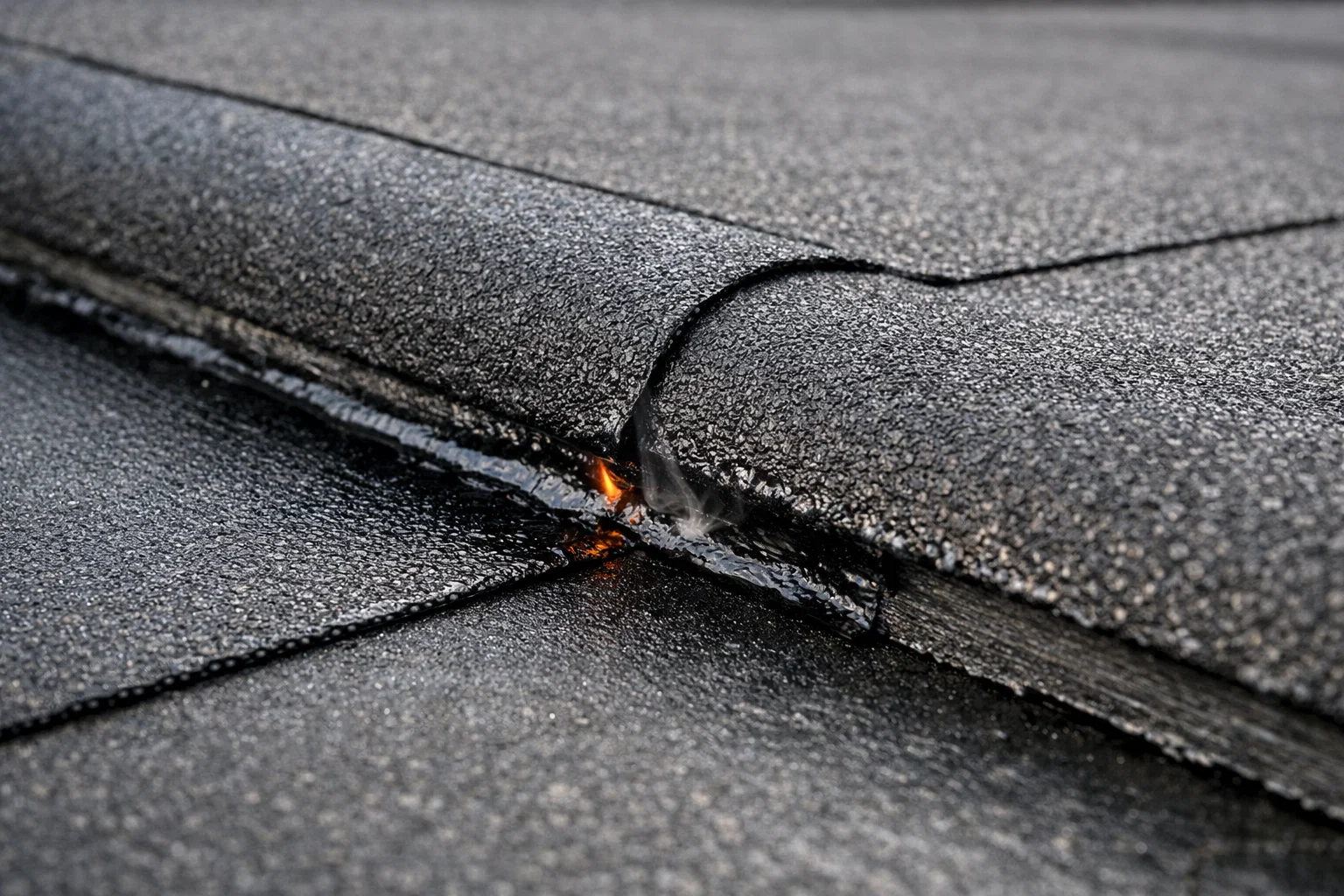
- Torch-on felt: Torch-on felt is fused with heat, making it stronger and more waterproof than cold-applied felt. It is easier to seal the edges and the upstands. These systems often consist of two or three layers that can last up to 25 years.
- Better membranes and reinforcements: Quality felt systems now use polymer-modified bitumen. These systems are more elastic and thermally stable, Best Roofers pting well to roof movement. They offer superior performance in extreme temperatures. Because the systems are so robust, they work well on surfaces like balconies and roof gardens with regular foot traffic.
The Benefits of Modern Felt Technologies
Modern felt technologies offer users many benefits, including:
- Strength and durability: Chemically bonded syntactic materials, in particular, are strong and resistant to tears. Embedded reinforcements prevent cracks and tears even in extreme temperatures. Modern felt roofs can last for up to 30 years.
- Weather-resistant: Modern bitumen and UV-resistant coatings provide modern felt systems with superior weather resistance.
- Temperature and sound insulation: Felt’s dense structure absorbs sounds and reduces vibration. It also provides excellent thermal performance.
- Flexibility: Modern felt materials are more flexible, allowing them to Best Roofers pt to building movement. These materials can withstand thermal contraction and expansion common on flat roof surfaces.
- Superior waterproofing: Multi-layer applications create a watertight surface that protects the building and contents for decades.
- Quick installation and repair: Modern felt is lighter and easier to handle than many other roofing materials. It is possible to patch flat roofs with felt and felt adhesive, resulting in a swift and effective repair when needed.
- Budget-friendly: Felt remains one of the most affordable roofing systems available for flat roofs.
Felt Roofing Materials: Protecting Your Building
Flat roof felt has been a popular, cost-effective roofing option for decades, but older systems needed replacement within 10 to 15 years. Modern technologies have improved felt roofing systems, creating a watertight roof cover that can protect infrastructure for up to three decades, delaying expensive and disruptive re-roofing and saving money over the long term. Choose the right materials, have them installed and regularly inspected by qualified professionals, and you shouldn’t have to think about your roof for years.